Is Solar Still Worth It in California in 2026? The Honest Answer for PG&E, SMUD, SCE & SDG&E
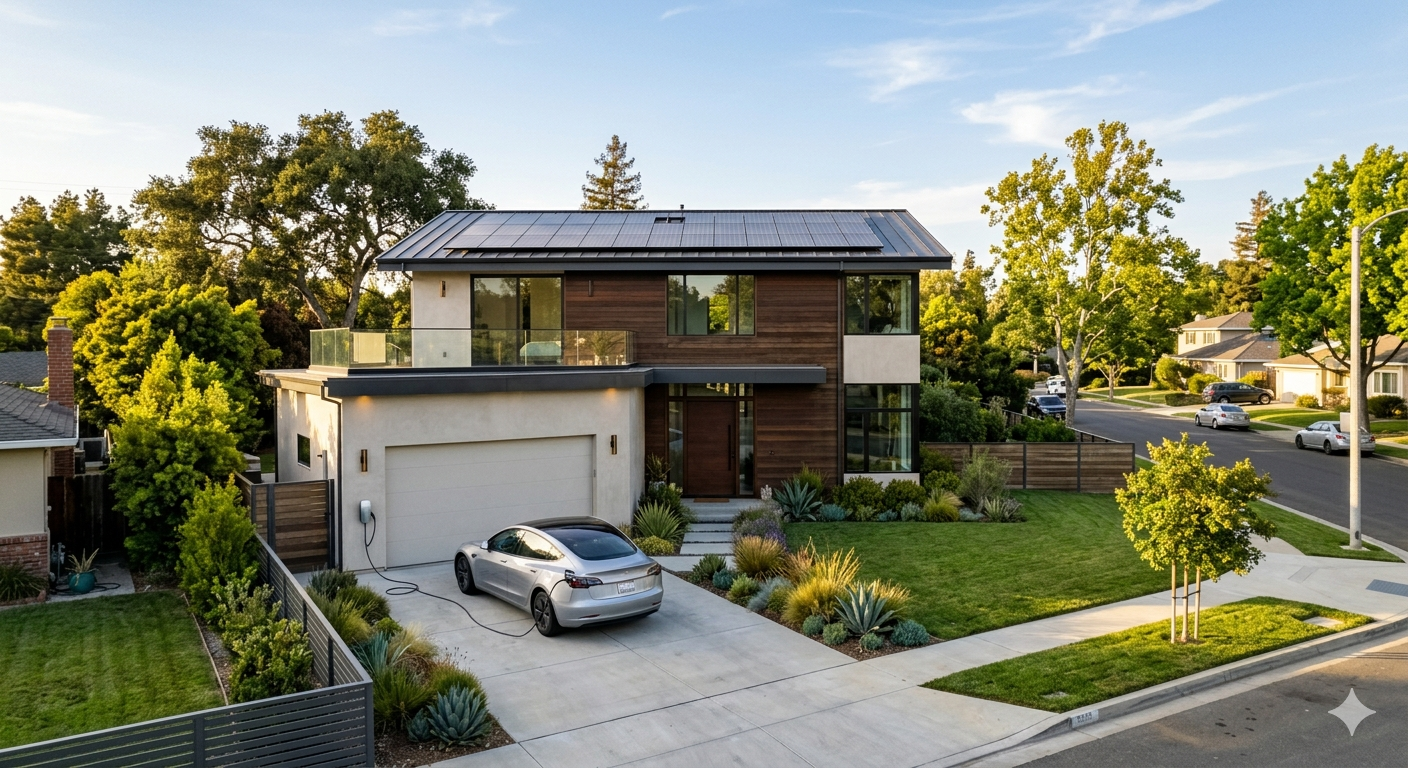
Short answer: Yes — and in 2026, real money is on the table to make it happen. PG&E customers can get up to $7,500 back through the Permanent Battery Storage Rebate. SMUD customers get up to $5,400 per Powerwall plus ongoing VPP credits. SCE customers get a flat $200 portable battery rebate. Add the 30% savings still available through a prepaid lease, and most California homeowners end up paying less than their old utility bill from day one. Here’s the honest 2026 breakdown of what’s actually available, by utility.
If you’ve been sitting on the fence about solar — or you’ve heard that NEM 3.0 “killed” the economics — this post gives you straight answers based on actual 2026 rebate programs and rate data across all five major California utilities. No sales spin. No outdated numbers.
What Solar & Battery Rebates Are Actually Available in California in 2026?
This is the question that actually determines whether solar makes sense for your budget right now — not a generic payback number. Here’s what’s real and currently active, utility by utility.
| Utility | Program | Rebate | Key Requirement |
|---|---|---|---|
| PG&E | Permanent Battery Storage Rebate | Up to $7,500 | New battery install, purchase agreement |
| PG&E | Portable Battery Rebate | $300–$500 | HFTD Tier 2/3, HFRA, or EPSS address |
| SCE | Portable Power Rebate | Flat $200 | PSPS-impacted circuit |
| SMUD | Powerwall Enrollment Incentive | $5,400/Powerwall + up to $1,320/yr VPP credit |
SSR rate, enroll within 90 days of PTO |
| SDG&E | — | No battery rebate | Advantage is rate savings instead — see below |
| LADWP | — | No battery rebate | Retail-rate net metering makes battery optional |
Some homeowners also qualify for an additional location-based incentive on top of the programs above, depending on your address and financing structure. Eligibility varies enough that we can only confirm it once we know your specific location — ask your consultant to check.
Want the full breakdown on any of these? See our dedicated guides: PG&E $7,500 Battery Rebate, PG&E Portable Battery Rebate, SCE Portable Power Rebate, and SMUD Battery Rebates.
What Did NEM 3.0 Actually Change for California Solar Customers?
NEM 3.0 reduced export credits — the money solar customers earn for sending power back to the grid — by roughly 75% compared to NEM 2.0. That is the single most important rate change to understand, separate from the rebates above.
NEM 3.0 took effect for new solar customers on PG&E, SCE, and SDG&E in April 2023. Under NEM 2.0, excess solar sent to the grid earned near-retail credits — effectively using the grid as a free battery. NEM 3.0 closed that approach by drastically reducing what utilities pay for exported solar.
What NEM 3.0 didn’t change: the cost of buying electricity from the grid. PG&E, SCE, and SDG&E rates kept climbing regardless of the policy change. Every kWh of solar you generate and use yourself is still worth exactly what you’d otherwise pay at retail — among the highest rates in the country. This is also why the PG&E and SMUD rebates above matter so much: battery storage is what lets you capture that value under NEM 3.0.
What Are the NEM 3.0 Export Rates for PG&E, SCE, and SDG&E in 2026?
Under NEM 3.0, utilities pay the “Avoided Cost Calculator” rate for exported solar — a wholesale rate set by the CPUC that varies by time of day and month. These rates are why battery storage — and the rebates that offset its cost — are now central to the math for new solar customers on these three utilities.
| Utility | NEM Program | Export Credit Rate | Peak Grid Rate (4–9 PM) | Battery Required? |
|---|---|---|---|---|
| PG&E | NEM 3.0 (Net Billing) | ~$0.04–0.08/kWh Avoided Cost rate — varies by hour |
$0.45–$0.55/kWh | Essential |
| SCE | NEM 3.0 (Net Billing) | ~$0.04–0.08/kWh Avoided Cost rate — varies by hour |
$0.55–$0.63/kWh | Essential |
| SDG&E | NEM 3.0 (Net Billing) | ~$0.04–0.10/kWh Avoided Cost rate — varies by hour |
$0.65–$0.75/kWh | Essential |
| SMUD | NEM 2.0 (Active) | ~$0.10–0.15/kWh Near-retail credit still available |
$0.22–$0.28/kWh | Optional |
| LADWP | Retail Net Metering Not subject to NEM 3.0 |
$0.22–0.37/kWh Near-retail credit |
$0.22–0.37/kWh | Optional |
The strategic shift in plain English: Under NEM 3.0, exporting solar earns $0.04–0.08/kWh. Buying that same electricity back during peak hours costs $0.45–0.75/kWh. A battery eliminates that gap — and on PG&E and SMUD, a rebate covers a meaningful chunk of what that battery costs. See our home battery storage guide for current pricing and options.
Is Solar Worth It in 2026? The Answer by California Utility
Whether solar saves you money in 2026 depends on which utility you’re with — and whether a rebate is available to offset your battery cost. Here is the direct answer for each of the five major California utilities.
| Utility | Avg Blended Rate | NEM Status | Battery Rebate | Savings Potential |
|---|---|---|---|---|
| PG&E | ~$0.38/kWh | NEM 3.0 | Up to $7,500 | Eliminate 85–100% of usage charges |
| SDG&E | ~$0.47/kWh | NEM 3.0 | None | Highest savings in the US — $400–600/mo |
| SCE | ~$0.35/kWh | NEM 3.0 | Flat $200 | Eliminate 85–100% of usage charges |
| SMUD | ~$0.13/kWh | NEM 2.0 Active | Up to $5,400/Powerwall | Strong savings + largest per-battery rebate in CA |
| LADWP | ~$0.22–0.37/kWh | Retail NM (NEM 3.0-exempt) | None | Solid solar-only savings; battery optional |
PG&E Territory
PG&E serves most of Northern and Central California — Fresno, Sacramento, Stockton, Vacaville, Bakersfield, and surrounding communities. At roughly $0.38/kWh blended, with peak rates hitting $0.45–0.55/kWh during summer evenings, every kilowatt-hour of solar self-consumed is a direct, dollar-for-dollar reduction in your bill. The Permanent Battery Storage Rebate covers up to $7,500 of a new battery install, and a properly sized solar + battery system can eliminate 85–100% of annual PG&E usage charges. See the full PG&E rebate breakdown.
SDG&E Territory
SDG&E customers generate the strongest solar savings of any utility in the United States — even without a dedicated battery rebate. At approximately $0.47/kWh blended — the highest residential rate of any major US utility — every kilowatt-hour of self-generated solar carries maximum dollar value. A properly sized solar + battery system can eliminate $400–$600 per month in SDG&E charges, and the 30% prepaid lease savings still apply here even without a utility rebate. See the dedicated San Diego section below for payback specifics.
SCE Territory
Southern California Edison serves much of the Los Angeles basin and Inland Empire. SCE’s $200 portable rebate is modest, but SCE’s NEM 3.0 dynamics mirror PG&E’s — battery storage is essential to maximize savings. SCE’s TOU-D-PRIME rate plan rewards high self-consumption and makes a well-designed solar + battery system financially strong for homeowners paying $200+/month today. See the SCE Portable Power Rebate for details.
SMUD Territory
SMUD is the outlier — Sacramento’s municipal utility still operates under NEM 2.0, offering near-retail export credits for excess solar. Solar-only systems still pencil well without battery storage. But the battery incentive is where SMUD really stands out: up to $5,400 per Powerwall plus a $440/year Virtual Power Plant credit per Powerwall for Tesla Powerwall customers who enroll within 90 days of Permission to Operate. Verify current amounts at smud.org — subject to change. Full details at our SMUD rebate guide.
SMUD homeowners: NEM 2.0 will eventually change. Homeowners who interconnect before that happens lock in their favorable export rate structure for the life of the system — on top of the rebate.
LADWP Territory
Los Angeles Department of Water and Power is a municipal utility exempt from NEM 3.0 — LADWP customers keep retail-rate net metering, earning $0.22–0.37/kWh for exported solar instead of the wholesale Avoided Cost rate that PG&E, SCE, and SDG&E customers get. That means battery storage is optional for LADWP customers, not essential — solar-only systems typically pay back in 6–9 years without needing a battery to capture peak-hour value. There is currently no dedicated LADWP battery rebate program; SGIP exists but is limited to an income-qualified waitlist, not a general incentive.
For Reference: Payback Period by Utility (2026)
Rebates and rates tell you what’s available; payback period tells you how long it takes for cumulative savings to equal the total system cost. The table below uses conservative 4% annual rate escalation — well below the CPUC-documented 6–8% average of the past decade.
| Utility | Solar Only — Cash | Solar + Battery — Cash (after rebate) | Solar + Battery — Prepaid Lease | 25-yr Savings Potential |
|---|---|---|---|---|
| SDG&E | 3–4 years Fastest in US |
6–7 years No rebate available; $0.47/kWh avg rate |
Positive Day 1 | $180,000+ |
| PG&E | 4–5 years Solar-only cash |
8–9 years After up to $7,500 rebate |
Positive Day 1 | $120,000+ |
| SCE | 4–5 years Solar-only cash |
8–9 years After $200 rebate |
Positive Day 1 | $110,000+ |
| SMUD | 5–7 years NEM 2.0 still active |
7–9 years After $5,400/Powerwall rebate |
Positive Day 1 | $60,000+ |
| LADWP | 6–9 years Retail net metering; battery optional |
— Battery not required to maximize savings here |
Positive Day 1 | Varies by usage |
Payback estimates assume typical 8–10 kW system, 4% annual utility rate escalation, NEM 3.0 self-consumption strategy where applicable, and current 2026 system pricing after any applicable utility rebate. Cash payback reflects no financing. Prepaid lease payback is positive from day 1 because monthly lease payment is less than monthly bill savings. Individual results vary — use our free calculator for your specific numbers.
No federal ITC for homeowners in 2026: The 25D residential solar tax credit expired December 31, 2025. Cash and loan buyers no longer receive the 30% federal credit. The prepaid lease structure passes the equivalent savings (via the 48E commercial ITC, active through 2027) to homeowners as an upfront price reduction — no tax liability required.
Is Solar Worth It in San Diego in 2026?
San Diego has the fastest solar payback period of any major utility territory in the United States — and it’s not close, even with no battery rebate on the table. SDG&E’s blended residential rate of ~$0.47/kWh (with peak rates reaching $0.65–0.75/kWh from 4–9 PM) means every kilowatt-hour of solar self-consumption saves more dollar-for-dollar than anywhere else in the country.
For a San Diego homeowner paying $350/month on SDG&E, a properly sized solar + battery system typically reduces that bill to the $25 monthly minimum connection fee — saving $325/month from day one on a prepaid lease. On a cash purchase, the system typically pays back in 6–7 years, leaving 18+ years of near-zero electricity costs.
| SDG&E Scenario | Current Bill | After Solar + Battery | Monthly Savings | Cash Payback |
|---|---|---|---|---|
| Typical Home | $250/mo | ~$25/mo (min fee) | $225/mo | 7–8 yrs |
| Higher Usage | $350/mo | ~$25/mo (min fee) | $325/mo | 6–7 yrs |
| High Usage + EV | $500+/mo | ~$25–50/mo | $450–475/mo | 5–6 yrs |
SDG&E rate escalation context: SDG&E rates have risen faster than any other major California utility, averaging 8%+ annually. Every year of delay adds to both what you pay before going solar and what the system ultimately saves you over 25 years. See our local San Diego solar guides: San Diego County overview, Chula Vista, and Escondido.
What Do the Real Savings Numbers Look Like for a California Homeowner?
Here is a straightforward comparison for a PG&E homeowner currently paying $400/month, after applying the Permanent Battery Storage Rebate. The numbers assume a conservative 4% annual utility rate increase, well below the CPUC-documented 6–8% average of the past decade.
| Scenario | Monthly Cost Today | Monthly Cost — Year 10 | Total Spent Over 25 Years |
|---|---|---|---|
| No solar — PG&E only (4% annual increase) | $400/mo | ~$592/mo | ~$193,000+ |
| Solar + battery — Prepaid Lease (30% off upfront) | ~$200–$280 + $25 PG&E min | Same fixed lease payment | System owned outright after year 5 |
| Solar + battery — cash purchase (after $7,500 rebate) | $25 PG&E min only | $25/mo | ~$7,500 total (PG&E min fee only) |
The $25/month figure is the PG&E Base Services Charge — the fixed monthly connection fee that applies to all customers including solar, as of 2026. A properly sized solar + battery system eliminates all usage charges, leaving only this fixed fee. For the complete all-electric home upgrade roadmap, visit our California All-Electric Home Guide.
Enter your utility and monthly bill — see which rebates you qualify for and your real savings estimate based on current 2026 programs.
How Do I Get 30% Off Solar Without the Tax Credit?
The federal residential solar tax credit (ITC/25D) is no longer available to individual homeowners for systems placed in service from 2026 onward. Many homeowners are surprised by this — but the savings are still fully accessible through the prepaid lease structure, and it stacks on top of the utility rebates above where applicable.
Here’s how it works: a third-party system owner purchases and installs the system, claims the 48E investment tax credit — which only third-party owners still qualify for through 2027 — and passes 30% savings directly to you as an upfront price reduction. You get the equivalent of the tax credit benefit without needing any tax liability. No filing, no waiting, no income requirement.
After five years, you have the option to purchase the system outright. Most homeowners do. This is how the majority of California solar + battery systems are being financed today. See our full breakdown of battery lease and prepaid lease options including current pricing.
Which Rebates Does Your Home Qualify For?
You just read the statewide rebate numbers. Now get the personalized answer — based on your utility, your bill, and your address. Takes 60 seconds.
Quick answers to the questions we hear most from California homeowners evaluating solar in 2026.
PG&E offers the largest rebate — up to $7,500 through the Permanent Battery Storage Rebate, plus a separate $300–$500 Portable Battery Rebate for HFTD/HFRA addresses. SMUD offers up to $5,400 per Powerwall (enrollment incentive) plus up to $1,320/year in ongoing VPP credits. SCE offers a flat $200 Portable Power Rebate for PSPS-impacted circuits. SDG&E and LADWP do not currently have dedicated battery rebate programs, though both have their own savings advantages (SDG&E’s high rates make solar pay back fastest in the state; LADWP’s retail net metering makes battery optional). Some homeowners also qualify for an additional location-based incentive depending on address — ask your consultant to check. See our PG&E, SCE, and SMUD rebate guides for full details.
The solar payback period in California in 2026 is typically 4–5 years for solar-only cash purchases and 8–9 years for solar + battery cash purchases under NEM 3.0, after applying any available utility rebate. SDG&E customers see the fastest payback due to California’s highest residential rates — as fast as 6–7 years for solar + battery, even without a rebate. Prepaid lease customers see positive cash flow from day one because monthly lease payments are lower than current utility bills. The federal 25D residential ITC expired December 31, 2025, so cash and loan buyers no longer receive the 30% tax credit — but the prepaid lease structure passes equivalent savings via the 48E commercial credit.
The solar + battery payback period in San Diego (SDG&E territory) runs 6–7 years for a cash purchase in 2026 — the fastest in California and among the fastest in the United States, even with no battery rebate available. This is driven by SDG&E’s blended residential rate of ~$0.47/kWh, which means every kilowatt-hour of self-generated solar saves more dollar-for-dollar than any other major California utility. A San Diego homeowner paying $350/month saves approximately $325/month from day one with a properly sized solar + battery system. On a prepaid lease, savings are positive immediately. See our San Diego solar guide for territory-specific details.
Under NEM 3.0 (Net Billing), PG&E, SCE, and SDG&E pay the CPUC Avoided Cost Calculator rate for exported solar — approximately $0.04–0.10 per kWh depending on the time of day and season. This is roughly 75% lower than what utilities paid under NEM 2.0. By comparison, buying electricity back from those same utilities during peak hours (4–9 PM) costs $0.45–0.75/kWh. The 10:1 difference between export credit and retail cost is why battery storage — and the PG&E and SMUD rebates that offset its cost — are essential for new solar customers on PG&E, SCE, and SDG&E. SMUD and LADWP remain on near-retail export credit structures.
No. NEM 3.0 changed the strategy, not the savings potential. Under NEM 3.0, solar maximizes savings through self-consumption rather than grid export. A properly designed solar + battery system can eliminate 85–100% of your PG&E, SCE, or SDG&E bill by storing daytime solar and using it during the expensive 4–9pm peak window — avoiding the grid entirely when rates are highest. Rebates on PG&E and SMUD make the battery itself more affordable, and the financial case remains strong, particularly for homeowners paying over $150/month.
For PG&E, SCE, and SDG&E customers — yes, battery storage is now essential to maximize solar savings under NEM 3.0. Without a battery, excess daytime solar gets exported to the grid at low NEM 3.0 rates ($0.04–0.10/kWh), leaving significant savings on the table. A battery captures that excess generation and discharges it during peak hours when grid electricity costs the most — up to $0.45–0.75/kWh. PG&E and SMUD both offer rebates that offset the cost of adding one. SMUD and LADWP customers are the exception; solar-only still saves well in those territories since both retain near-retail export credit.
Yes — the 30% savings is still fully accessible through the prepaid lease structure, and it stacks with utility battery rebates where applicable. The federal residential tax credit for individual homeowners expired at end of 2025, but third-party owners (leasing companies) still qualify for the 48E investment tax credit through 2027 and pass that 30% discount to you as an upfront price reduction. No tax liability required, no filing, no waiting. This is the most common structure for California solar + battery systems today.
Most California homeowners save $100–$300 per month from day one with a solar + battery system, depending on their utility, current bill, and any rebate applied. Over 25 years that compounds significantly as utility rates continue rising: PG&E, SCE, and SDG&E have averaged 6–8% annual rate increases over the past decade per CPUC data. A homeowner paying $400/month today could spend $193,000+ in utility costs over 25 years without solar. SDG&E customers see the largest dollar savings of any utility in the country due to their ~$0.47/kWh blended rate, and SMUD customers get the largest per-battery rebate in the state at up to $5,400 per Powerwall. Use our free solar savings calculator to see the specific numbers for your bill and utility.
For most California utilities, a monthly electric bill of $150 or more makes solar + battery worth evaluating. At that level, the system savings typically exceed the financed lease payment from day one. Homeowners paying $200–$400/month or more see the strongest financial case. Homeowners paying under $100/month may find the savings too limited to justify the system cost, though this threshold is lower for SDG&E customers due to their higher rates, and lower still where a PG&E or SMUD battery rebate applies.
Find Out Which Rebates You Qualify For — and What You’d Save
Enter your utility and average monthly bill. Get a real rebate and savings estimate before you talk to anyone.
Use the Free Calculator →Serving PG&E · SMUD · SCE · SDG&E · LADWP · No pressure, no obligation · Ed Watts · (209) 216-8180