
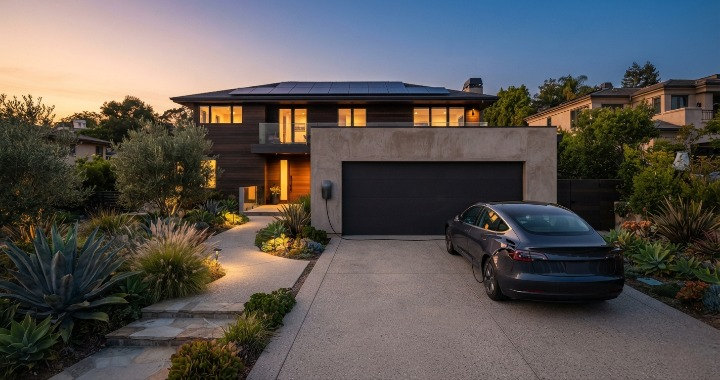
Best Level 2 EV Chargers
for California Homeowners
California's peak electricity rates hit $0.50–0.63/kWh — charging your EV at the wrong time costs nearly as much as gas. The right Level 2 charger with TOU scheduling changes that. Here's exactly what to buy, what it costs to install, and what rebates you can stack across every California utility in 2026.
2026 Recommendations — PG&E · SCE · SMUD · Pioneer
Best Level 2 EV Chargers for California Homeowners
Ranked by TOU scheduling capability, connector compatibility, and solar self-consumption performance — the factors that matter most on PG&E, SCE, and SMUD rates.

Lectron NEXUS 48A Hardwired
Automotive-grade hardwired charging built for California's TOU rate structure on PG&E and SCE. ETL listed (UL 2594/2231/2251/817), Energy Star and FCC certified, backed by a 3-year warranty.
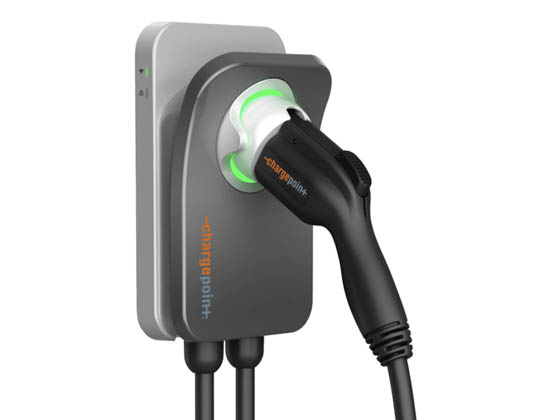
ChargePoint Home Flex
Top pick for SMUD customers. Best-in-class 23 ft cable reach and proven network app for off-peak scheduling.

Emporia Classic Level 2
Award-winning value pick. Best solar self-consumption integration for SCE homeowners on TOU-D-PRIME.
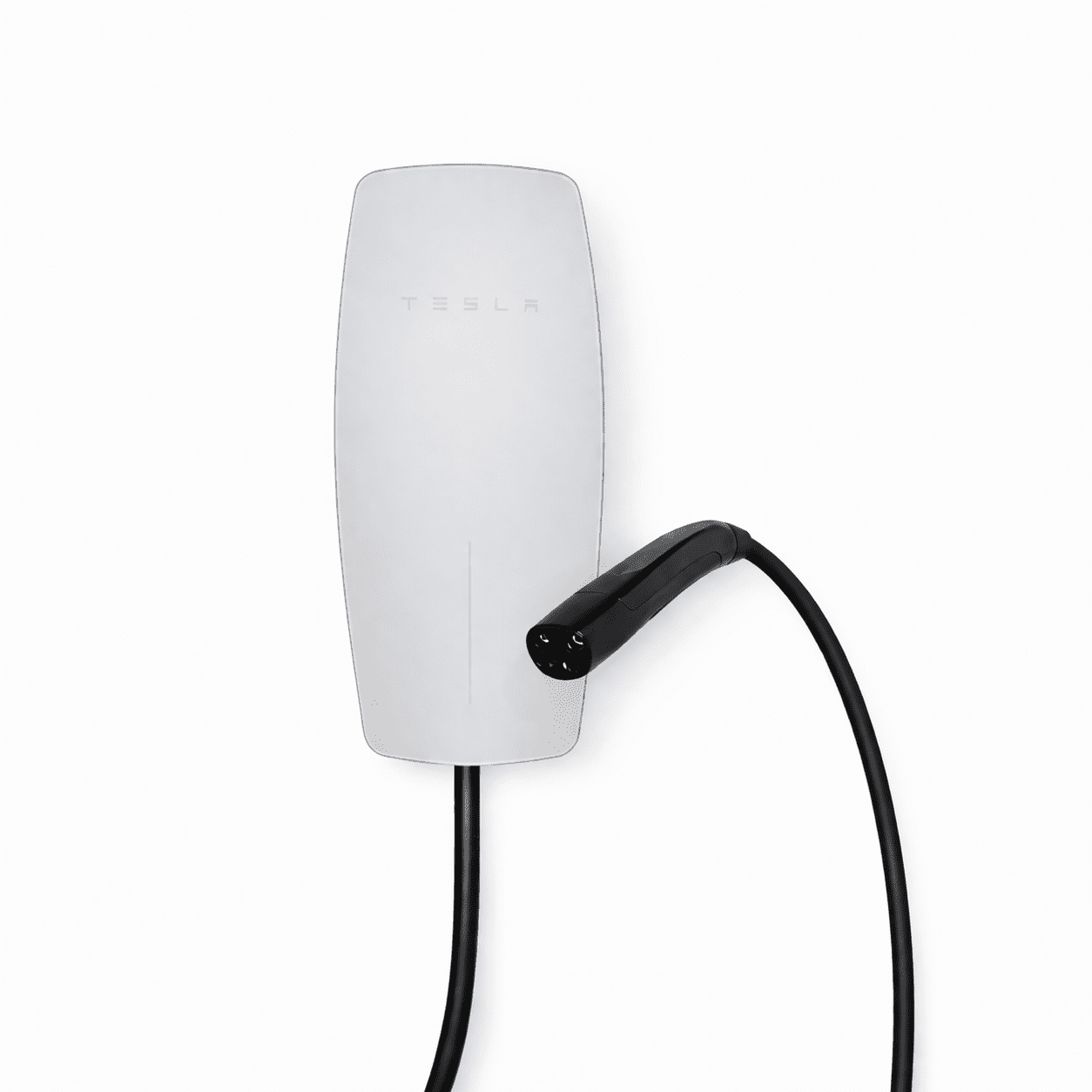
Tesla Wall Connector
Best for Tesla owners. Native app integration with Powerwall, Scheduled Departure, and solar prioritization built in.

Lectron Vortex Plus NACS→CCS
Non-Tesla EV? This adapter unlocks access to 25,000+ V3 and V4 Tesla Supercharger stalls nationwide. The first UL 2252 certified NACS-to-CCS1 adapter available. Requires your automaker's Supercharger access approval.
How to Choose the Right Level 2 Charger
for Your California Home
Not all Level 2 chargers perform equally on California TOU rates. Three factors separate the right choice from an expensive mistake.
California's peak rates (4–9 PM) run $0.45–0.63/kWh. Off-peak (midnight–6 AM) drops to $0.18–0.22/kWh. A charger without scheduling capability will charge whenever you plug in — including peak windows. A smart charger with WiFi and app scheduling automatically delays charging until off-peak rates kick in, saving $80–$100/month for a typical EV driver on PG&E or SCE.
Most EVs sold in California since 2024 use the NACS (Tesla-style) connector. Older EVs and many non-Tesla models use J1772. If you drive a Tesla, a NACS-native charger like the Lectron V-BOX Pro or Tesla Wall Connector charges at full speed without an adapter. Mixed or non-Tesla households are best served by a J1772 charger with a NACS adapter — or the Lectron, which handles both natively.
Under California's NEM 3.0 (Net Billing), solar electricity you export to the grid earns only $0.04–0.08/kWh — roughly 10x less than what you'd pay to buy it back at peak rates. The highest-value strategy is self-consumption: charging your EV directly from your solar panels during the day or from battery storage at night. The Emporia Pro is the only charger on this list with built-in solar-aware charging that automatically shifts to self-consumption mode when your panels are producing. For solar homeowners, this is the single biggest financial lever available.
Most California Homeowners Qualify
for At Least One Rebate Program
California has 14+ utility and county rebate programs for residential Level 2 EV charger installation. The federal 30C tax credit that used to stack with these expired June 30, 2026 — but the utility and county programs below remain active. Check your utility before purchasing; you may still be able to offset most or all of your installation labor cost.
Rebate programs are subject to funding availability and may close before their listed end dates. Always verify current availability directly with your utility before purchasing. Programs and amounts current as of Q3 2026.
Ready to Install — or
Pair It with Solar?
A Level 2 charger paired with home solar brings your cost per mile to $0.017 — 12× cheaper than gas. We install chargers standalone or bundled with solar on one permit. Serving PG&E, SCE, SDG&E, SMUD, and Pioneer territories statewide.
Installation Cost Guide — California 2026
How Much Does It Cost to Install a Level 2 EV Charger in California?
The charger is only part of the cost. For most California homeowners, the total installed price — charger plus electrical work, permit, and inspection — runs $1,000 to $2,500. Here's exactly what drives that number and how to know where your home falls before you get a single quote.
Distance from Main Panel to Charger
This is the single biggest variable. Every additional foot of conduit and wire adds material and labor cost. A short 20-foot run from your panel to the garage is fast and cheap. A 60-foot run through a finished wall to the opposite side of the house — or out to a detached garage — can add $300–$1,000 in wire and labor alone, before any trenching.
~$10–$20 per foot beyond 10 ftPanel Size, Age & Available Breaker Space
A Level 2 charger running at 48 amps requires a dedicated 60-amp breaker (NEC requires 125% of continuous load). If your panel is 200 amps with open slots, installation stays simple and inexpensive. If your panel is 100 amps, at capacity, or pre-1990, you may need a subpanel ($600–$1,200) or full panel upgrade ($1,500–$3,000). Have an electrician check your load before ordering hardware.
Panel upgrade: +$1,500–$3,000 if neededAccess to the Charger Location
Indoor garage installs on unfinished walls are the easiest and least expensive. Finished drywall requires cutting, patching, and repainting — adding labor hours. Outdoor installations require weatherproof conduit, exterior-rated mounting boxes, and sealed fittings to meet California code. Detached garages often require trenching the wiring underground, which can add $300–$2,000 depending on the distance and ground conditions.
Outdoor/detached: +$200–$2,000Permit & Inspection Requirements
California cities require an electrical permit for any new 240V circuit — this is non-negotiable and actually protects you. Permit cost ranges from $50–$300 depending on your city, and processing takes 1–5 business days in most areas. A licensed electrician handles filing, and inspection is typically included in the permit fee. Some utility rebate programs require a permitted and inspected installation to qualify, so skipping the permit can cost you more than the permit itself.
Permit: $50–$300 depending on city| Your Home Situation | Estimated Total Cost | Complexity |
|---|---|---|
| Panel next to garage, open breaker slot, indoor mount | $1,000–$1,500 | Simple |
| Panel on opposite side of house, medium run through finished wall | $1,500–$2,000 | Moderate |
| Outdoor mount or detached garage, trenching required | $1,800–$2,500+ | Moderate–High |
| Any of the above + panel upgrade required (older home or full panel) | $3,000–$5,500+ | Complex |
California EV Charger Rebates — Stack These Before You Pay
Most California homeowners can offset $750–$4,200 of installation cost through active utility and county programs.
Rebate programs are subject to funding availability and eligibility requirements. Always verify current amounts and application status directly with your utility before purchasing. Many county air districts and CCAs (like Pioneer Community Energy) offer additional stacking incentives — check driveclean.ca.gov for your area. Programs and amounts current as of Q3 2026.
Adding solar at the same time as your EV charger drops your cost per mile to $0.017 — and we handle both under one estimate.
Get a Free Solar + EV Estimate →No credit pull. No sales call. Northern & Central California — PG&E, SMUD, SCE, and Pioneer territories.
EV Charger Questions — Answered for California Homeowners
Pair Your New Charger
with Home Solar
A Level 2 charger gets you to $0.051/mile. Solar + a smart charger gets you to $0.017/mile — 12x cheaper than gas. We serve PG&E, SCE, SMUD, and Pioneer Community Energy territories across Northern and Central California.
Get My Free Solar + EV Estimate →