The PG&E Bill Decoder: Why Your Bill Is So High (and How to Lower It Fast)

If your PG&E bill makes you say, “How is this even possible?”—you’re not crazy.
PG&E bills are high because of how they’re structured (delivery vs. generation), when you use power (Time-of-Use), and whether you’re on the right rate plan (many people aren’t). Add wildfire costs, grid upgrades, and growing demand—and here we are.
This guide breaks it down in plain English and shows you the fastest ways to take control.
Want the shortcut?
Our Smart Bill Tune-Up (Basic) reviews 12 months of your Green Button data and identifies your best savings path—rate plan, TOU timing, spikes, and programs you may qualify for.
“No home visit required”
“48-hour turnaround”
“Clear numbers, no pressure”
“We don’t sell your info”
Smart Bill Tune-Up (Basic) includes:
12-month Green Button review
TOU pattern + peak exposure
Spike detection
Program check (CARE/FERA/Medical Baseline)
Best next steps (rate plan, quick wins, solar+battery fit)
What you’ll learn
Why your bill can rise even when you “use less”
How TOU pricing quietly inflates costs
Which assistance programs may lower your bill (CARE/FERA/Medical Baseline)
Quick wins to reduce costs this month
When solar + battery makes sense (based on real usage, not guesses)
Get the 1-page cheat sheet to spot TOU traps, spikes, and bill-saving programs in under 2 minutes.
1) How a PG&E Bill Is Built
A PG&E bill isn’t “one price.” It’s a stack of prices.
Delivery vs. Generation (the big split)
Generation = the electricity itself.
Delivery = the cost to move it to your home and run the grid (wires, poles, maintenance, wildfire mitigation, upgrades, operations).
Why it matters: delivery charges are a big portion of your bill and can rise even if your kWh stays the same.
Time-of-Use (TOU): the clock is part of the bill
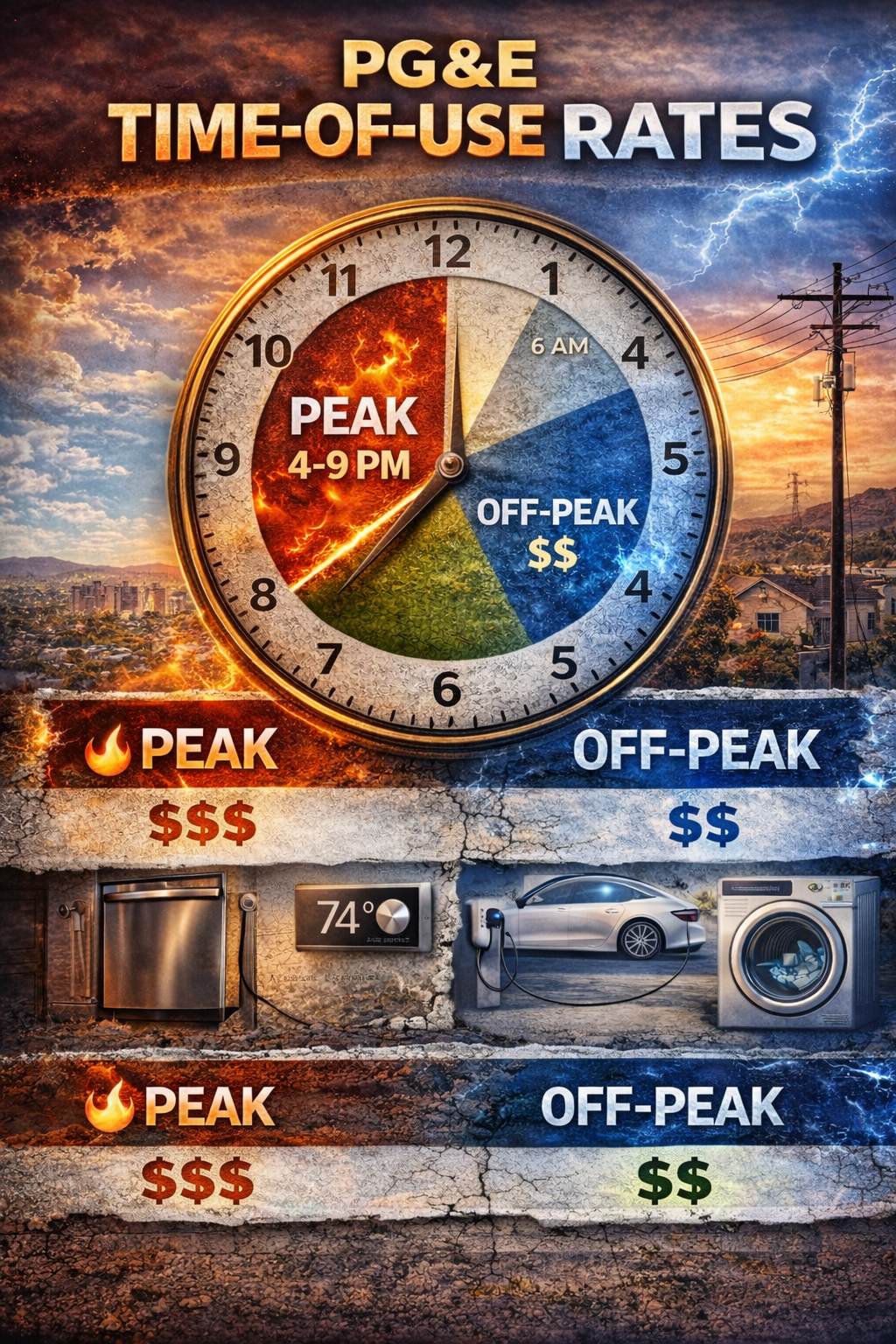
With TOU, electricity costs:
More during Peak
Less during Off-Peak
Sometimes least during Super Off-Peak
Same appliance. Same energy. Different price—depending on the hour.
Baseline allowances
Baseline varies by region and season. If you’re consistently above baseline (common with AC and EVs), costs can climb faster than expected.
Bottom line: You don’t just need “lower usage.” You need better timing + the right plan.
Base Services Charge (Starting March 2026): What it is + what it means
Starting in March 2026, PG&E says your bill will be restructured so some costs are separated from the per-kWh price.
Important: This is not a new fee—it’s a new way of showing costs that are currently bundled into your kWh rate.
What it covers (per PG&E):
Infrastructure and maintenance to connect your home to the grid
Energy programs
Call center services
Billing/customer service
What changes on your bill:
You’ll see a Base Services Charge listed separately
The price per kWh is expected to be lower than it otherwise would be
Depending on your usage, your total bill may or may not go down
Why this matters for you (real talk):
If you use less electricity, a higher fixed portion of the bill can feel more noticeable
If you use a lot of electricity, the lower per-kWh price may help more
Either way, it makes your rate plan + hourly usage timing even more important
Watts tip:
When fixed charges become more visible, the best move is to stop guessing and get data-driven about your usage, spikes, and TOU timing—because those are the levers you still control.
Want us to map what this means for your home?
Our Smart Bill Tune-Up (Basic) reviews 12 months of Green Button data and shows your best path forward.
2) Why California Electricity Is So Expensive
This isn’t just a “you” problem. California power is expensive because system costs are expensive.
Big drivers:
Wildfire mitigation + risk reduction (grid hardening, vegetation work, safety programs)
Aging infrastructure + upgrades (reliability, safety, monitoring, capacity)
Clean energy transition (new procurement + grid planning; timing matters more)
Electrification (EVs/heat pumps add load—especially at peak)
Large commercial loads like data centers/AI (a growing planning factor)
The punchline: you can’t control the system—but you can control the levers that decide what you pay.
3) Programs That Can Lower Your PG&E Bill

A lot of households qualify for help and don’t realize it. These are the big ones:
CARE
A discounted rate for income-qualified households. Many people assume they don’t qualify—then find out they do.
FERA
Designed for households that don’t qualify for CARE but still need relief (often larger households).
Medical Baseline
Adds baseline allowance for qualifying medical needs and can meaningfully change bill impact for some homes.
Want us to check your situation?
The Smart Bill Tune-Up (Basic) includes a program check (CARE/FERA/Medical Baseline) plus a data-driven bill review.
4) PG&E Rate Plans: How to Stop Overpaying
The “best plan” depends on your real hourly usage, not what you hope you’ll do.
Your bill is usually driven by a few big loads
HVAC / AC
EV charging
Pool pump
Electric water heating
High daytime usage (WFH / always-on loads)
If those hit peak hours, your bill gets wrecked.
Don’t guess—use your load shape
Green Button data shows:
When you use power (hour-by-hour)
Peak exposure
Seasonal patterns
Spikes and weird “always-on” usage
That’s how you pick the right plan with confidence.
5) Quick Wins (Lower It This Month)
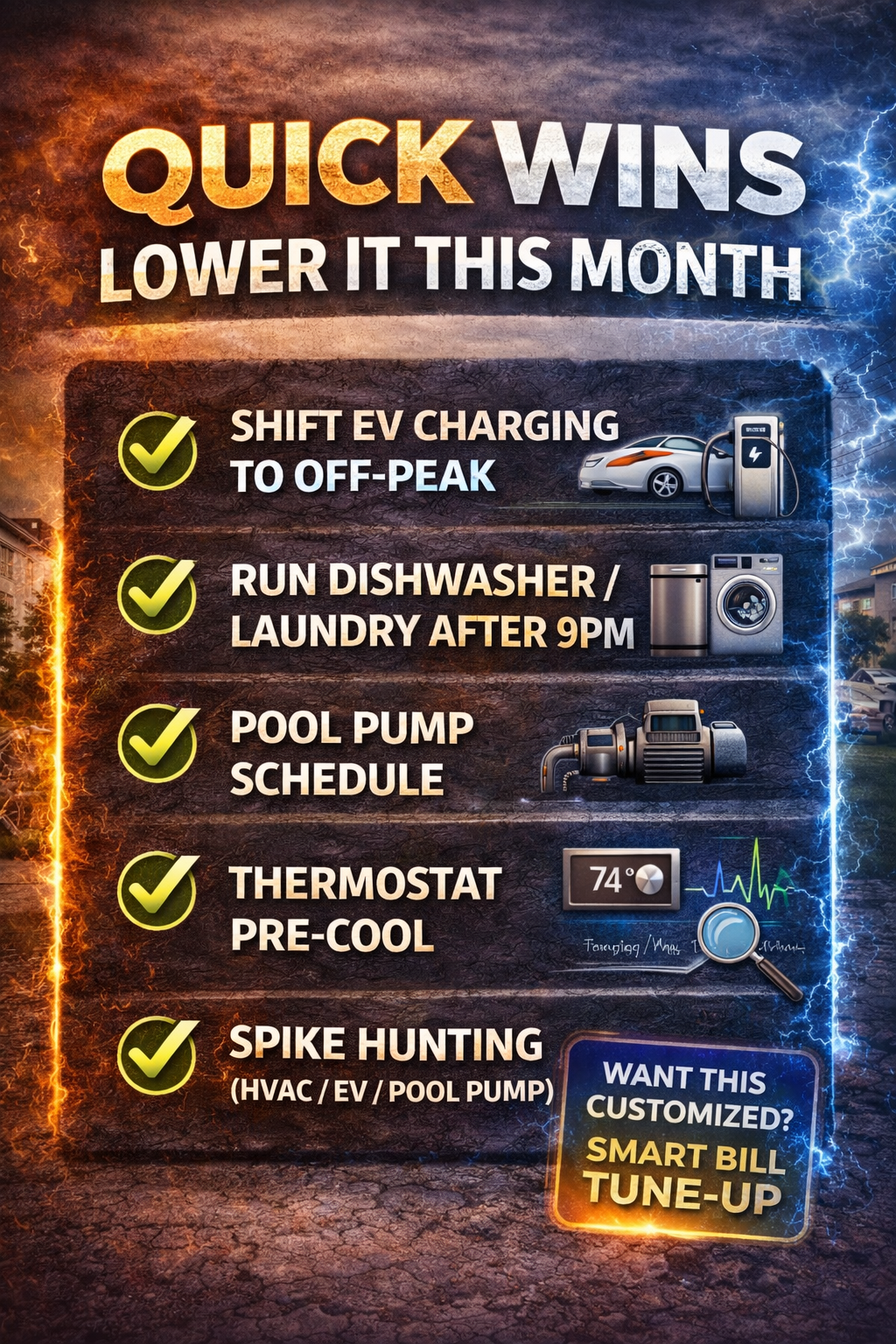
You don’t need solar to start saving. You need fewer spikes and better timing.
Shift flexible loads away from peak
Best targets:
EV charging
Dishwasher / laundry
Pool pump
Space heaters / dehumidifiers
HVAC strategy: don’t fight peak
Use scheduling and pre-cooling / pre-heating to avoid paying the highest rates when demand is hottest.
Spike hunting (the #1 reason bills jump)
Most “mystery bill increases” are spikes:
AC running longer than expected
EV charging at peak
Pool pump schedule drift
Old fridge/freezer cycling nonstop
Space heaters silently printing money for PG&E
6) When Solar + Battery Makes Sense (and When It Doesn’t)
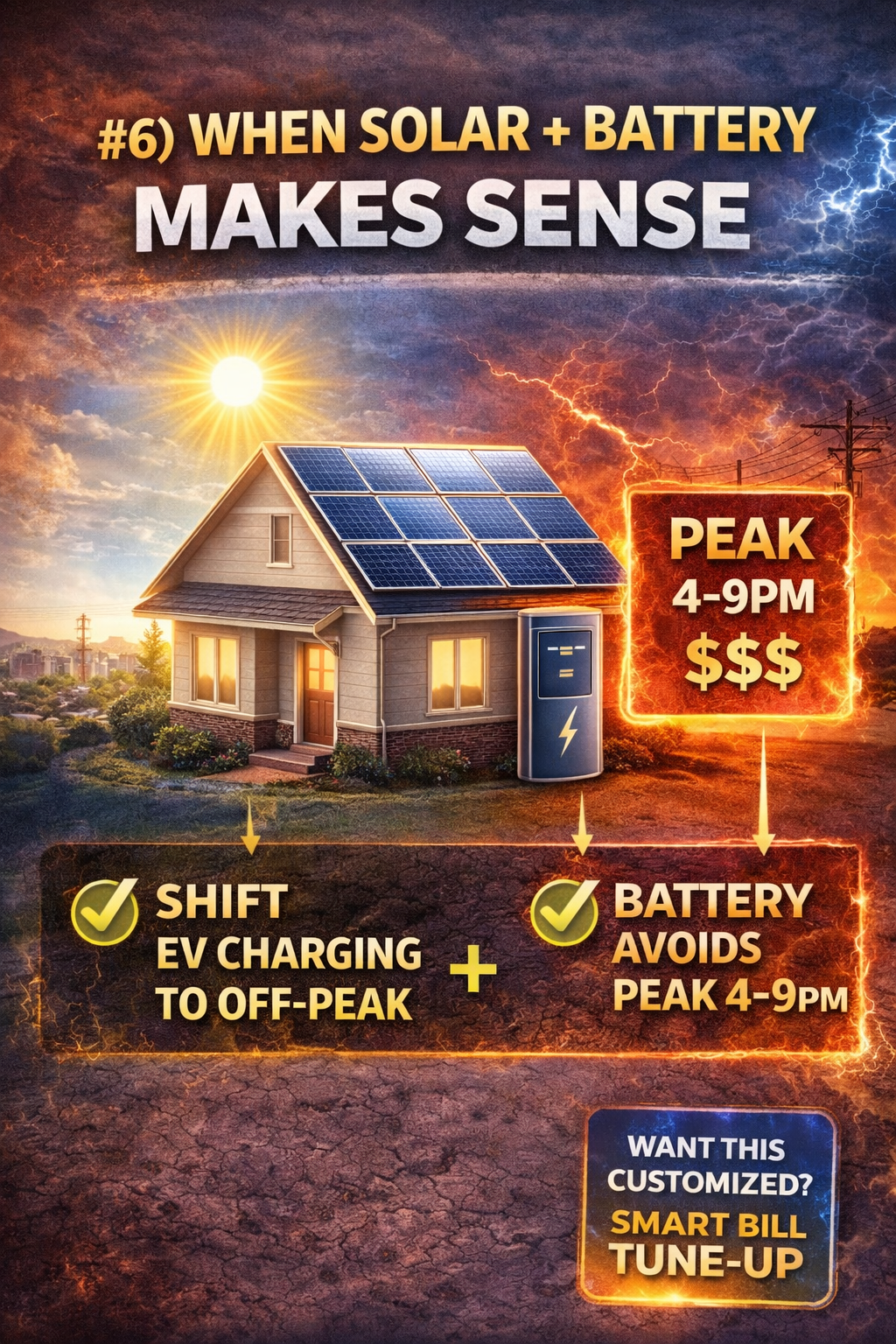
Solar reduces how much electricity you buy.
A battery helps you avoid buying electricity during peak.
But here’s the truth: your hourly usage pattern matters as much as your total usage.
Two homes with the same monthly kWh can get totally different solar/battery results depending on:
Peak-hour load
EV/HVAC dominance
Consistency and spikes
Weekday vs weekend patterns
If someone tries to sell solar without analyzing your load shape, they’re guessing. We don’t do guessing.
7) The Shortcut: Smart Bill Tune-Up (Basic)
If you want clarity without the runaround, our Smart Bill Tune-Up (Basic) includes:
12 months of Green Button data review
TOU pattern analysis (where you’re getting hit)
Spike detection + likely causes
Rate plan guidance based on real usage
Quick wins checklist
Programs you may qualify for (CARE/FERA/Medical Baseline)
If you’re a strong fit: solar + battery scenarios with real math
Get the Basic Smart Bill Tune-Up here:
FAQ: PG&E Bills, Green Button Data, and What to Do Next
Q: What is Green Button data?
Green Button data is your utility-provided electricity usage data (often hourly or 15-minute intervals). It shows when you used power—not just how much—so we can spot TOU traps, spikes, and patterns that drive your bill.
Q: Do I need solar for any of this to help?
No. Most households can save money from rate plan optimization, TOU timing changes, and fixing spikes—even without solar.
Q: Will you change my PG&E rate plan for me?
We don’t make changes to your account. We give you a clear, step-by-step recommendation so you can switch plans (or keep yours) confidently.
Q: I’m on a CCA (Sonoma Clean Power / Peninsula Clean Energy / etc.). Can you still review my bill?
Yes. CCAs change the generation portion, but you still have PG&E delivery charges, TOU timing, and usage patterns that affect your total bill.
Q: Why did my bill go up even though my kWh went down?
Common reasons include higher delivery charges, seasonal rate differences, TOU timing shifts (more usage during peak), and usage spikes you didn’t notice (HVAC, EV charging, pool pump, old appliances cycling).
Q: What are the most common “bill spikes”?
The usual suspects: AC/heating running longer, EV charging at peak, pool pump schedule drift, space heaters, old fridges/freezers, and “always-on” loads that quietly add up.
Q: What is the Base Services Charge (starting March 2026)?
PG&E says it will separate some grid/service costs from the per-kWh price. It’s not a new fee, but it changes how costs appear on your bill. Your per-kWh price may be lower, and whether your total bill drops depends on your usage pattern.
Q: How fast do I get my Smart Bill Tune-Up?
Typical turnaround is about 48 hours (2 business days) after we receive what we need.
Q: What if you don’t find meaningful savings?
If we can’t identify a clear path to improvement (rate plan, timing, programs, efficiency moves, or a better long-term solution), we’ll tell you straight—no pressure.
Q: What happens after I buy the Smart Bill Tune-Up (Basic)?
You’ll get simple instructions to share your data (Green Button or billing info). Then we deliver your breakdown: TOU patterns, spikes, quick wins, program options, and whether solar+battery makes sense for your home.