How to Get Started in Solar Sales
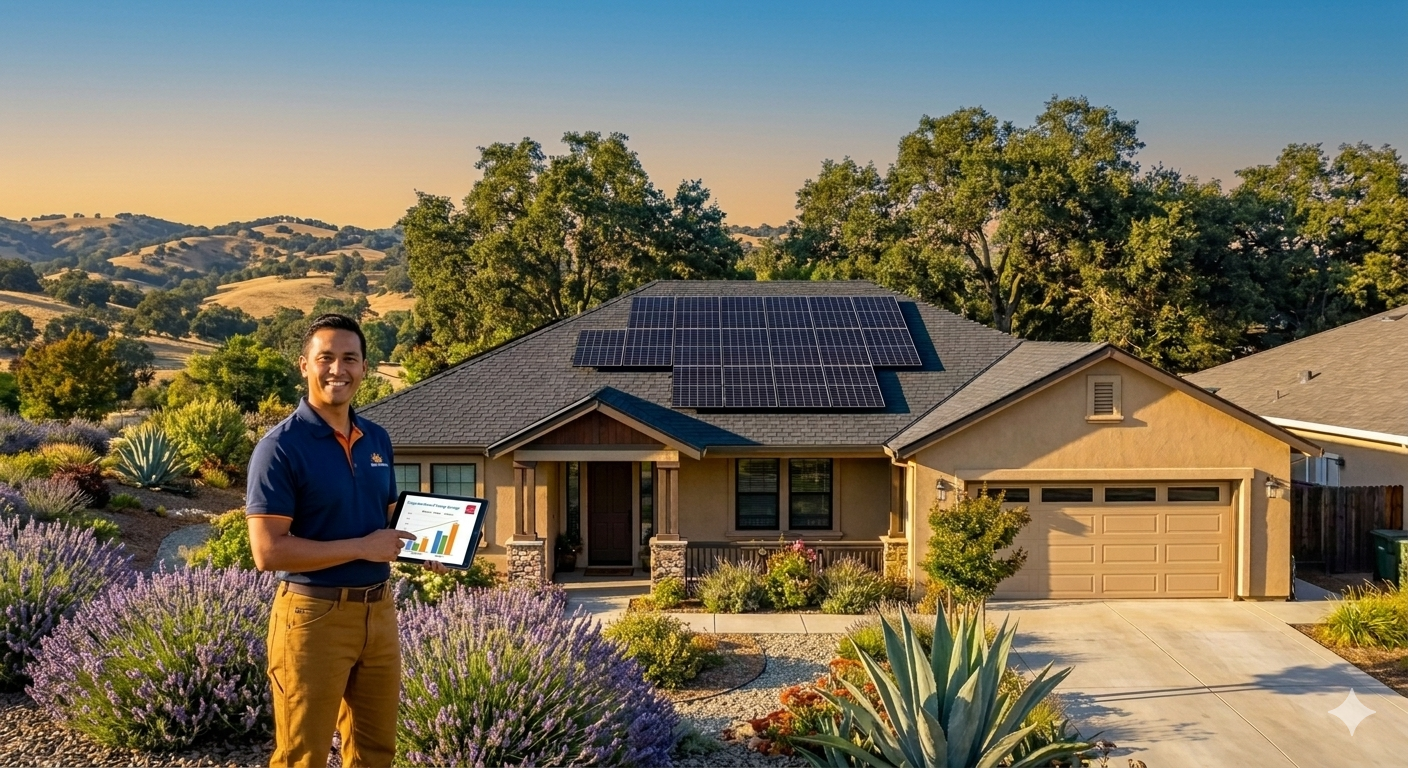
How to Get Started in Solar Sales: What Nobody Tells You Before You Start
10 years. 400+ closed deals. Here's what the job actually looks like — the income potential, the learning curve, and the one skill that determines whether you make it.
Is Solar Sales Worth Getting Into in 2026?
Solar is still one of the few industries where a person with no degree, no license, and no prior sales experience can realistically build a six-figure income — if they're willing to do the work required to get there.
I've been in solar sales for 10 years and closed over 400 deals across California — PG&E territory, SMUD territory, SCE territory, and Pioneer Community Energy service areas. I've watched people come over from roofing, HVAC, and home improvement and double their income within 12 months. I've also watched people who were handed a script and a territory wash out inside 60 days because nobody told them what this job actually requires.
This post is the version I wish existed when I started.
What Solar Sales Actually Is — and Isn't
Solar sales is commission-based home services sales. You're meeting homeowners, understanding their utility situation, and helping them decide whether solar, battery backup, or a combination of both makes financial sense for their home. You're not a technician. You're not climbing on roofs. You're solving a financial problem — a rising electric bill — with a long-term solution.
What separates the top performers isn't energy or charisma. It's product knowledge and the ability to dissolve skepticism — particularly in the second half of a consultation, when homeowners start raising objections that less-prepared reps can't handle. That's the skill gap most training programs ignore completely.
"The reps who struggle aren't struggling because they can't talk to people. They're struggling because they don't know the product well enough to answer hard questions — and homeowners can tell within about 90 seconds."
Who Actually Succeeds in Solar Sales?
In 10 years, I've noticed the reps who last and grow tend to come from one of three places.
1. Complete beginners who are hungry
No sales experience, no solar knowledge — but coachable, willing to do the work to learn the product, and not too proud to follow a proven process. These reps often outperform experienced hires because they don't bring bad habits with them. The learning curve is real but it's not steep — it just requires genuine effort in months one and two.
2. Home services veterans making a lateral move
Roofing, HVAC, windows, pest control — if you've sold anything in someone's home on a commission basis, you already have the most important skill: the ability to sit across from a homeowner, build trust, and close. Solar's product knowledge has a learning curve, but the sales fundamentals transfer directly. Most reps in this category are earning meaningfully more within six months than they did in their prior industry.
3. Experienced solar reps at the wrong company
This is more common than people admit. A rep is putting up solid numbers but working for a large national company that underpays per deal, micromanages their territory, or doesn't carry the financing products homeowners actually want. If this is you, the question isn't whether you're good enough — it's whether you're in the right structure.
How Solar Sales Commission Works
Most residential solar reps in California are paid as 1099 independent contractors on a commission basis. There are two common structures: a percentage of the total system value (typically 5–8%), or a flat rate per closed deal regardless of system size. Both have trade-offs depending on the markets and deal sizes you're working.
What most job descriptions don't mention clearly: commissions are typically split across milestones. A portion pays at contract signing, the remainder at install or Permission to Operate (PTO). That timing matters a lot for cash flow in your first few months when your pipeline is still building.
According to industry data from Zippia and RepVue, California solar sales reps report average annual earnings exceeding $100,000. Entry-level reps in their first year typically land between $40,000–$70,000. Experienced reps with strong referral pipelines regularly earn $120,000–$200,000+. There is no salary cap — income scales directly with deal volume and close rate.
One thing worth knowing: the big national companies often pay less per deal because their brand and marketing infrastructure makes sales "easier" on paper. Independent reps working with a strong local EPC partner and the right product stack frequently earn more per close — with more autonomy over how they build their business.
What the First Six Months Actually Look Like
Month 1 — Product immersion
You need to understand how net metering works, the difference between a lease, PPA, loan, and prepaid lease, what your territory's utility rates mean to a homeowner's savings calculation, and how to read a utility bill to identify real opportunity. This takes genuine effort. Most reps who quit do so in this phase — not because the job is hard, but because they underestimated how much product knowledge matters when a skeptical homeowner asks a question you can't answer.
Months 2–3 — First conversations
You'll start finding your rhythm — what works in the first five minutes, which objections come up most, how to handle "let me think about it." Every experienced rep has a mental library of these patterns. You build yours through repetition. Expect to close your first deal somewhere in this window if you have adequate training and lead access.
Months 4–6 — Compounding
Referrals from early deals start coming in. Your follow-up pipeline matures. You close faster because you've heard every objection enough times to respond without thinking. This is where the income starts feeling consistent rather than unpredictable.
The reps who make it through the first six months rarely leave. The reps who don't make it usually failed for one reason: they didn't get enough early training on the objection-handling piece — the hardest part of this job that most companies treat as an afterthought.
What to Ask Before Joining Any Solar Company
The structure you join matters as much as your own effort. Before you commit, get clear answers to these questions:
- What financing products do you offer? A company limited to one lender will cost you deals constantly. Homeowners have different credit profiles, goals, and risk tolerances. You need leases, PPAs, loans, and ideally a prepaid lease option.
- Who is your EPC partner and what's their track record? Your reputation is tied to the installs that happen after you close. Find out who's doing the work, what their license number is, and how many projects they've completed.
- What does support look like after onboarding? A script and a product sheet aren't support. Ask whether someone will review your proposals, help with system design, and be reachable when a deal gets complicated.
- What territories and utility areas do you cover? Utility rates determine how strong your savings pitch is. PG&E territory in NorCal has some of the highest residential rates in the country — ideal for solar ROI conversations. Know your market before you start.
- How and when do commissions pay? Get the milestone structure in writing. Understand exactly what triggers each payment and what happens if a deal falls through after signing.
Ready to Start? Here's How Solar With Watts Works.
We operate across NorCal and Central California — PG&E, SMUD, SCE, and Pioneer Community Energy territories. Independent reps work with an established, licensed EPC partner, access a full financing product suite, and get proposal and design support on every deal. We serve homeowners across diverse California communities and our product stack is built to meet them where they are.
We're not a door-knocking operation. We work warm inbound leads, referrals, and self-generated business. You keep your independence as a 1099 contractor with the infrastructure of a company that's closed 400+ deals.
Apply to Join Solar With Watts → Applications reviewed personally by Ed. No recruiters, no automated screening.The One Skill That Determines Everything
I've trained reps across every experience level, and the single biggest predictor of long-term success in solar sales isn't product knowledge, territory, or lead quality. It's the ability to handle skepticism — specifically the doubt a homeowner feels in the second half of a consultation when the numbers are good but something is still holding them back.
Most reps lose deals they should win right there. They've presented correctly, the savings are real, the financing works — and then the homeowner says "let me think about it" and goes dark. The difference between a rep who closes that deal and one who doesn't comes down to a specific skill set: knowing how to dissolve doubt without creating pressure.
That pattern — good numbers, real skepticism, lost deal — is what I spent years trying to understand and solve. It's why I built Deals From Doubt™: not as a bag of tricks, but as a framework for helping skeptical homeowners get to yes when the math already makes sense.
Not Ready to Commit to a Company Yet? Start Here.
The Deals From Doubt™ tools are built for commission-based home services reps — solar, roofing, HVAC, windows — who want to close more of the deals they're already getting. No pressure tactics. Just a real framework for dissolving the skepticism that kills good deals.