SDG&E 4-9 PM Peak Rates: Why San Diego Solar Needs a Battery
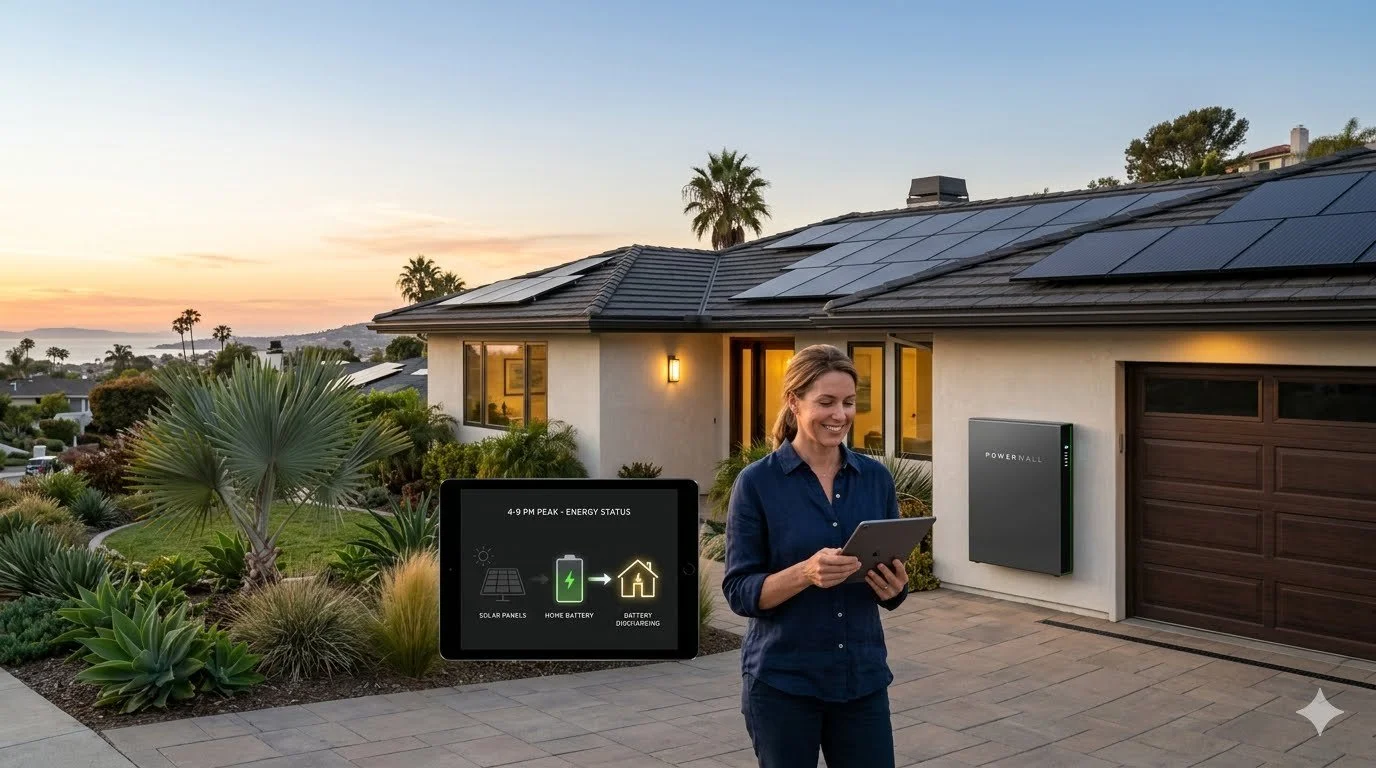
SDG&E 4-9 PM Peak Rates: Why San Diego Solar Needs a Battery
In SDG&E territory, the most expensive electricity often shows up exactly when families are home: dinner, laundry, air conditioning recovery, TV, devices, pool equipment, and EV charging. This guide explains why the 4-9 p.m. window matters and how a properly designed solar and battery system can reduce exposure to peak pricing.
SDG&E 4-9 PM Peak Rates: Why San Diego Solar Needs a Battery
In SDG&E territory, the most expensive electricity often shows up exactly when families are home: dinner, laundry, air conditioning recovery, TV, devices, pool equipment, and EV charging. This guide explains why the 4-9 p.m. window matters and how a properly designed solar and battery system can reduce exposure to peak pricing.
Why A Battery Can Make Solar More Valuable In SDG&E Territory
Under California’s Net Billing Tariff, often called NEM 3.0 or the Solar Billing Plan, exported solar energy is not valued the same way it was under older net metering rules. For many homeowners, the strongest strategy is to use more solar energy inside the home instead of sending extra daytime production to the grid.
A home battery helps by storing extra solar during the day and discharging it later, especially during the 4-9 p.m. window. That can reduce the amount of electricity the home buys from SDG&E during expensive hours.
This does not mean every home needs the same battery setup. A retired couple at home during the day, a family charging two EVs, and a home with a pool pump and late-afternoon AC load may all need different system designs.
| Home Usage Pattern | Why It Matters | Battery Design Question |
|---|---|---|
| High evening usage | The home imports more energy during SDG&E’s expensive period. | How many kWh are needed to cover typical 4-9 p.m. usage? |
| EV charging at home | Charging at the wrong time can erase savings quickly. | Should charging shift to super off-peak, solar hours, or a controlled schedule? |
| Pool pump or spa load | Timed equipment can accidentally run during expensive hours. | Can the schedule move into solar production hours? |
| Inland heat and AC recovery | Homes in hotter inland areas may spike after 4 p.m. | Should the proposal include pre-cooling strategy and battery discharge? |
| Backup power needs | Battery sizing changes if the homeowner wants outage protection. | Which loads should stay powered during an outage? |
Homeowners comparing storage should review home battery backup options, current California SGIP battery incentives, and how battery storage affects the larger decision of whether solar is worth it in California in 2026.
Want To Know If Your SDG&E Bill Needs A Battery?
Schedule an energy use consultation and compare solar-only against solar-plus-battery using your actual SDG&E usage, roof, and goals.
Who Should Seriously Consider Solar + Battery In San Diego County?
Solar-plus-battery is worth evaluating when your SDG&E bill is driven by evening usage, EV charging, air conditioning, or future electrification. It is also worth considering if you want backup power during outages or want to reduce exposure to future SDG&E rate changes.
Strong solar + battery candidates
- Monthly SDG&E bills over $200
- Heavy 4-9 p.m. usage
- EV charging at home
- Pool pump, spa, or electric appliances
- Inland homes with larger cooling loads
- Homeowners who want outage protection
Proposal details to request
- Solar-only versus battery comparison
- Expected annual production
- Battery discharge assumptions
- EV charging schedule assumptions
- Estimated first-year and lifetime savings
- Cash, loan, PPA, lease, and prepaid lease options
If you are in Chula Vista, review the local Chula Vista solar guide. For the broader market, use the San Diego County solar hub. If EV charging is part of your bill, review the guide to the best EV chargers for California homes before finalizing battery size.
What A Good SDG&E Solar + Battery Proposal Should Include
A good proposal should not pressure you into the biggest system or the fastest signature. It should explain how the system will perform against your actual SDG&E bill, especially during the 4-9 p.m. window.
| Proposal Item | Why It Matters | What To Look For |
|---|---|---|
| Usage-based design | Your system should match your bill, not an average home. | Annual usage, seasonal usage, and evening load reviewed. |
| Battery sizing | Battery value depends on how much peak usage it can cover. | Clear kWh capacity and discharge strategy. |
| Rate plan assumptions | SDG&E time-of-use pricing affects savings. | Proposal shows how the system handles 4-9 p.m. usage. |
| Financing comparison | The payment structure changes the net outcome. | Cash, loan, lease, PPA, and prepaid lease reviewed side by side. |
| Future load planning | EVs, heat pumps, and home upgrades can change the right system size. | Proposal includes expected future usage changes. |
For a full comparison of every solar payment structure available in California in 2026 — PPA, prepaid lease, PACE, GoGreen, and more — see the California energy payment options hub. For SDG&E-specific financing, read the California solar financing guide. If you are comparing PPAs, review the California solar PPA guide before choosing a long-term contract.
Get An SDG&E Solar + Battery Review
Send your SDG&E usage and goals. Watts Home Services LLC can help compare solar-only, solar-plus-battery, prepaid lease, lease, PPA, loan, and cash options so you understand the tradeoffs before signing.
Frequently Asked Questions
Do SDG&E customers need a battery with solar?
Not every home needs a battery, but many SDG&E customers should evaluate one. Batteries can improve solar economics by storing daytime solar for evening use, especially during the 4-9 p.m. peak window.
Why does 4-9 p.m. matter for San Diego solar?
Many homes use more electricity during 4-9 p.m. because families are home, cooking, cooling the house, doing laundry, using electronics, and sometimes charging EVs. If the home imports power during expensive hours, the bill can stay high even after solar.
Is solar-only still worth it in SDG&E territory?
Sometimes. Solar-only can still reduce bills, especially for homes with strong daytime usage. But homes with high evening usage should compare solar-only against solar-plus-battery before deciding.
How many batteries do I need for an SDG&E home?
The right number depends on evening usage, backup goals, EV charging, and budget. The proposal should estimate how much of your 4-9 p.m. load one battery covers before recommending additional storage.
What should I bring to a solar battery consultation?
Bring your latest SDG&E bill, annual usage if available, EV charging plans, pool or HVAC details, and any backup power goals. Those details help size the solar and battery system correctly.