
California PSPS Outage Kit
The Next Shutoff Could Last Days. Here's the Outage Kit to Have Ready.
When the shutoff text arrives, the lanterns and power banks sell out fast. This is the kit I'd want on the counter before a PG&E, SCE or SDG&E shutoff: light, phone power, cold food, clean water and a way to hear the news.
Plan for at least five days. California shutoffs can run longer than people expect. PG&E, for example, has said two to seven days. Whether you're with PG&E, SCE or SDG&E, your kit needs light, phone and medical power, a battery or hand-crank radio, a way to keep food cold, and one gallon of water per person per day.
As an Amazon Associate I earn from qualifying purchases. Product links on this page may earn a commission at no extra cost to you.
What should be in a PSPS outage kit?
Build your kit around five days without power. That covers a long PSPS shutoff in PG&E, SCE or SDG&E territory, plus time for crews to inspect the lines before power comes back. The list below follows SCE's outage supply list and PG&E's guidance as relayed to customers by local cities.
| Kit item | Why it matters in a shutoff | How much or what to look for |
|---|---|---|
| Lanterns and flashlights Gear | Safer than candles, especially during the dry, windy weather that triggers shutoffs. | One lantern per main room, a flashlight per person, plus spare batteries. |
| Phone power Gear | Your phone is how you get shutoff updates, restoration times and emergency alerts. | A charged power bank per person. A portable power station covers several days. |
| Radio Gear | Works when cell service and internet slow down or drop. | Battery or hand-crank, ideally with NOAA weather channels. |
| Cold food storage Gear | A closed fridge stays cold for about 4 hours. A full freezer holds about 48 hours. | A good cooler, ice packs, and a fridge thermometer to check food. |
| Water | Some homes on wells lose water when the pump loses power. | One gallon per person per day. Plan for five days. |
| Food | Cooking may not be possible on an electric range. | No-cook, nonperishable food and a manual can opener. |
| First aid and medications | Pharmacies nearby may be closed too. | A first aid kit, a week of prescriptions, and copies of medical info. |
| Medical device power Gear | Oxygen, CPAP and other devices can't wait for power to return. | A backup battery sized to the device. Ask your utility about Medical Baseline programs. |
| Safety Gear | Generators cause carbon monoxide risk. Power returning can surge. | A battery-powered CO alarm and surge protectors on electronics. |
| Car and garage | Gas stations and garage doors need power too. | Keep half a tank or a good EV charge. Learn your garage door's manual release. |
| Paper contact list | A dead phone means lost numbers. | Doctor, family, utility outage line and neighbors, written down. |
Items tagged "Gear" have product picks in the next section.
What outage gear actually helps during a California shutoff?
These are the picks I'd put in a kit for a multi-day PG&E, SCE or SDG&E shutoff. Each one solves a specific problem from the checklist above: light, phone power, news, cold food, water, safety and heat.
Prices change often, so they aren't listed here. Buttons open the product page, where you'll see today's price. As an Amazon Associate I earn from qualifying purchases.
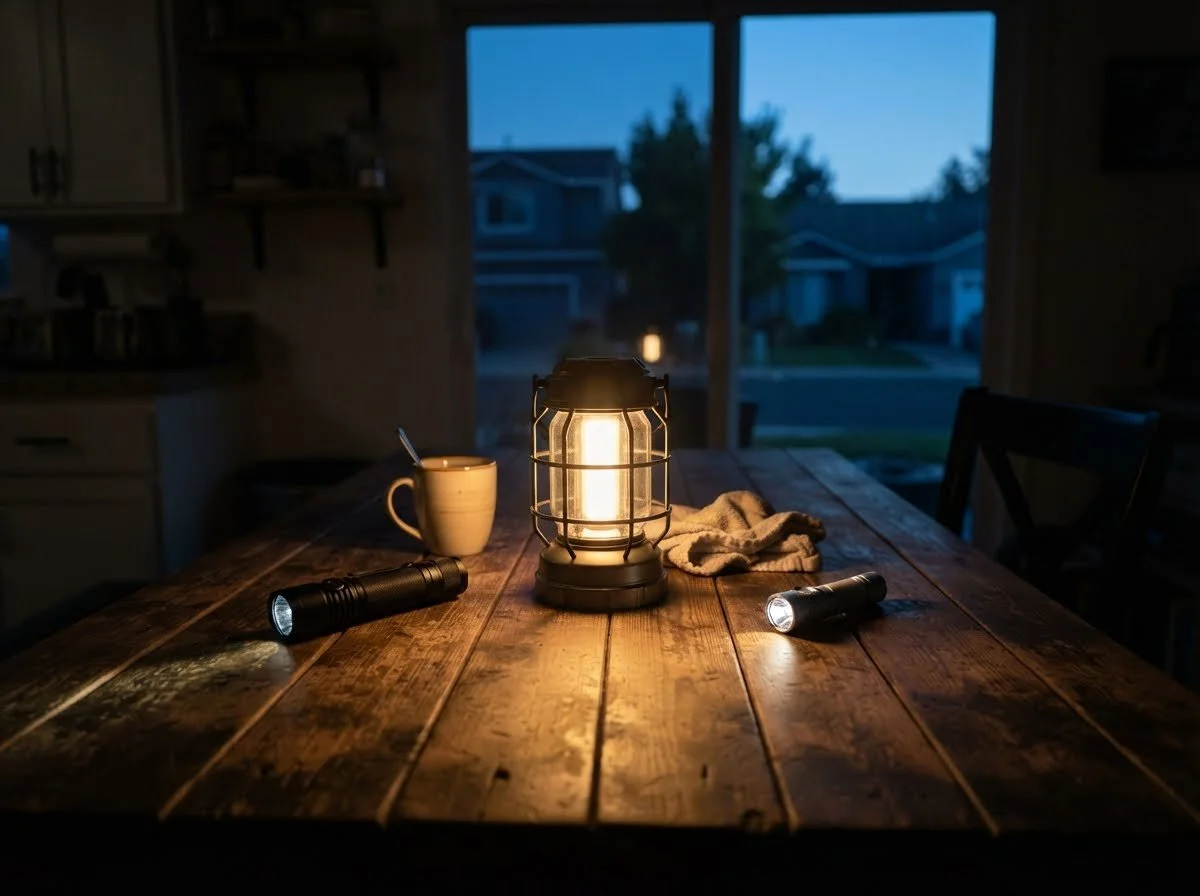
Light
Skip the candles. Shutoffs happen on dry, windy days, and an open flame is the last thing you want indoors.
Lepro LED Camping Lantern (Rechargeable)
Lights a whole room and recharges by USB, so you can top it off from a power bank or power station.
GearLight S1000 LED Flashlight (2-Pack)
Bright, simple flashlights for walking the house, checking the panel or heading outside after dark.
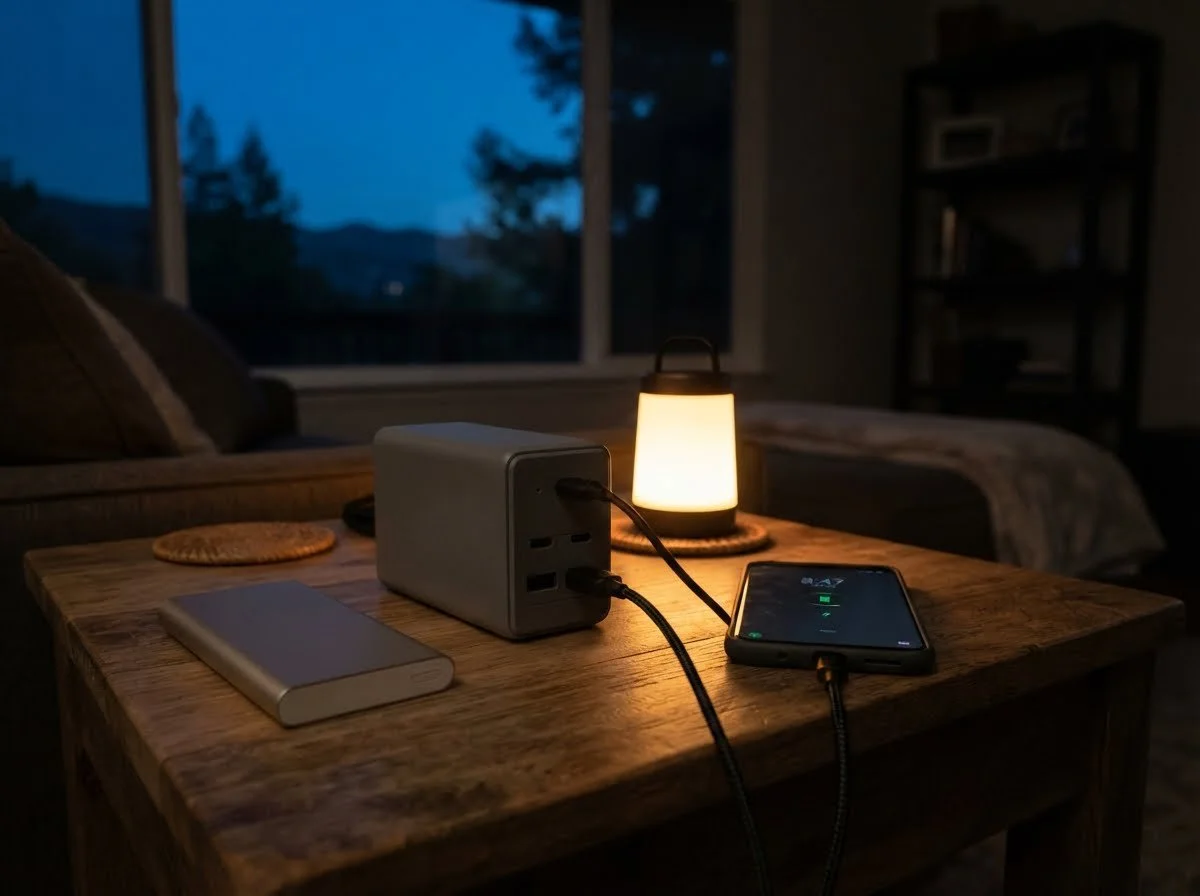
Phone and portable power
Your phone is how shutoff updates and restoration times reach you. A power bank keeps it alive. A portable power station keeps the router, lights, a CPAP or a small fridge going too.
Anker 20,000mAh Power Bank
Pocket-size backup that gives a typical phone several full charges. Get one per person.
EcoFlow DELTA 3 Classic
A 1,024Wh station that runs Wi-Fi, lights, phones and medical devices through a long shutoff. Recharges from the wall, your car or solar panels.
BLUETTI Elite 200 V2
A bigger 2,073Wh station with 2,600W output, sized for multi-day outages and heavier loads like a full-size fridge.
Not sure which size you need? My portable battery vs. generator guide walks through it. Some PG&E and SCE customers can also get a rebate on portable power.
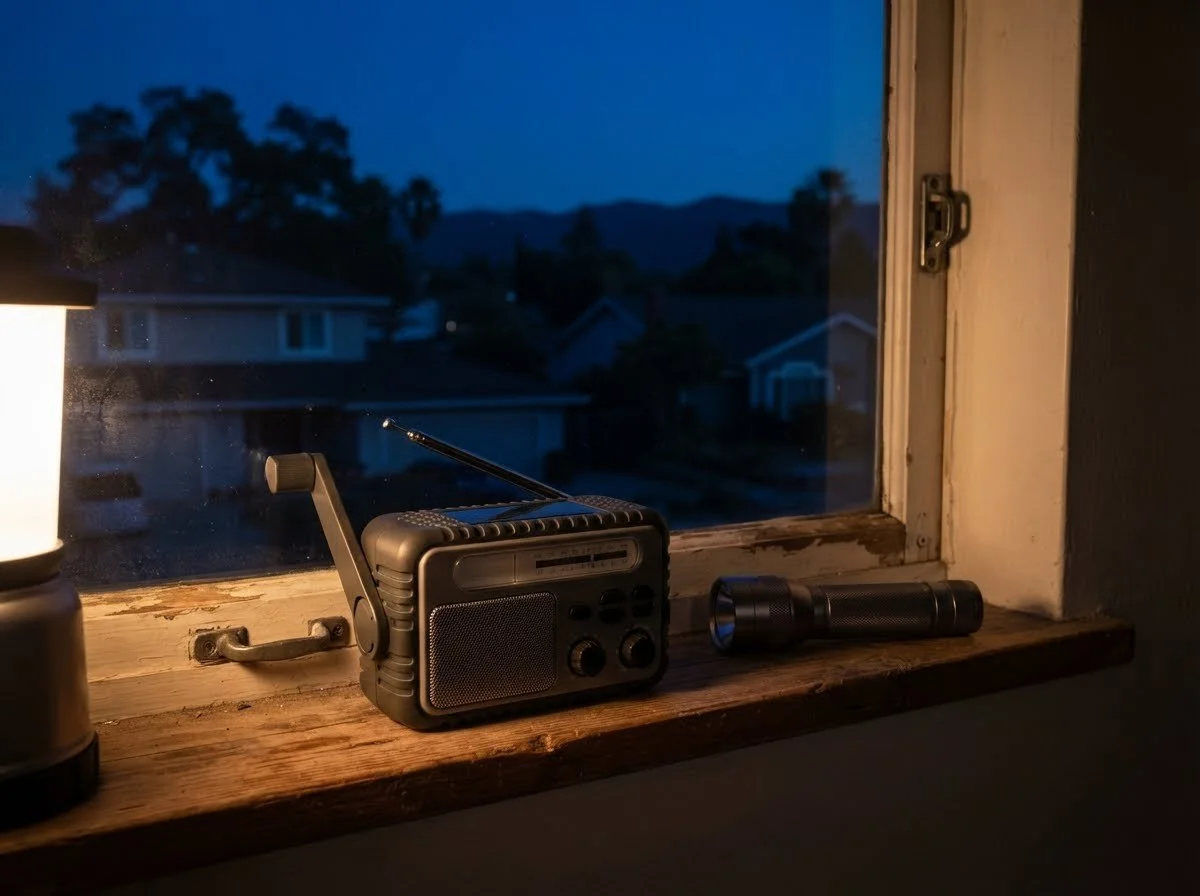
Emergency radio
When cell service slows down or towers lose backup power, a radio still brings in local news and weather alerts.
Midland ER310 Emergency Weather Radio
NOAA weather alerts plus AM/FM, with a hand crank and built-in flashlight so it keeps working when the batteries don't.
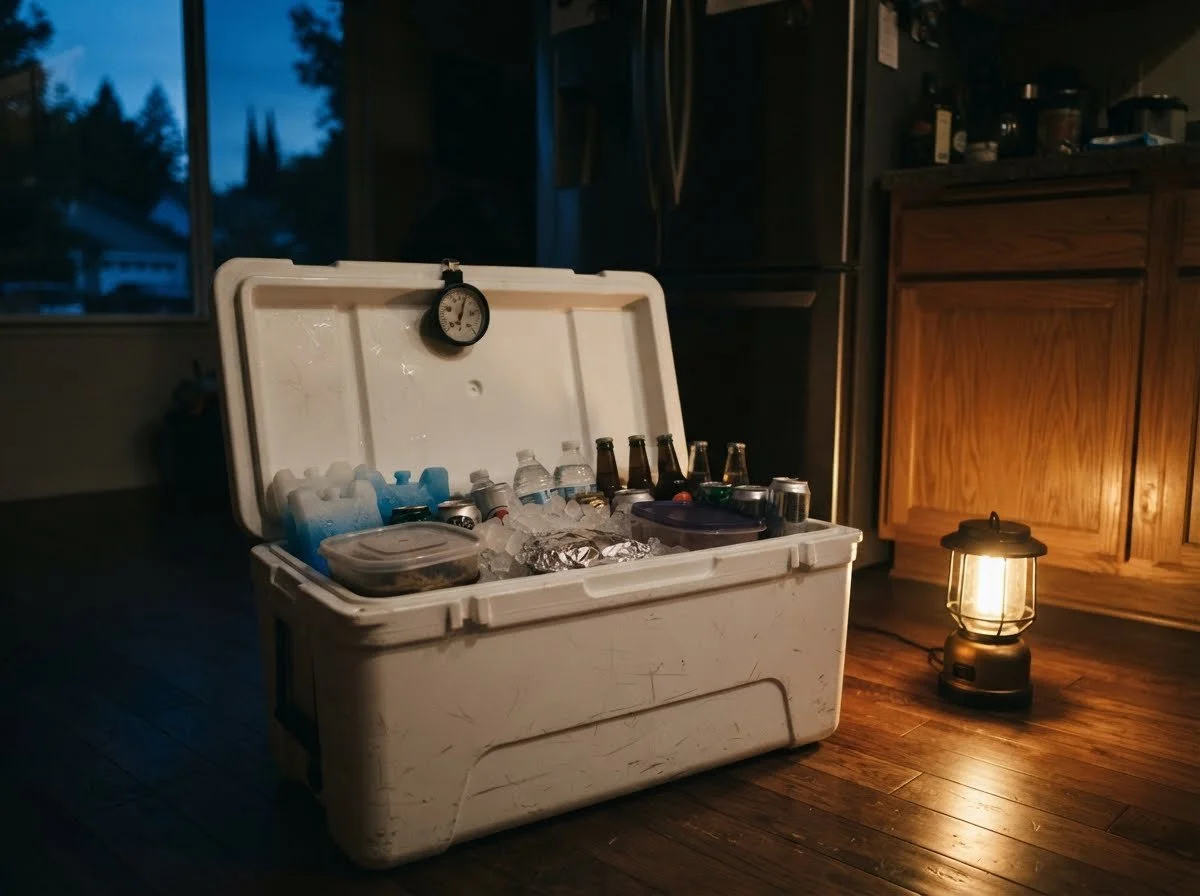
Keeping food cold
A closed fridge stays cold for about 4 hours. After that, move the essentials to a cooler and keep the fridge door shut.
Coleman Xtreme 5-Day Cooler
Built for long ice retention, which is exactly what a multi-day shutoff calls for.
Cooler Shock Reusable Ice Packs (Large, 3-Pack)
Rated by the maker to stay cold for up to 24 to 48 hours. Keep them in the freezer so they're ready when the text comes.
AEVETE Digital Fridge/Freezer Thermometer (2-Pack)
Large, easy-to-read screen with a magnetic back. It tells you whether food is still safe instead of guessing.
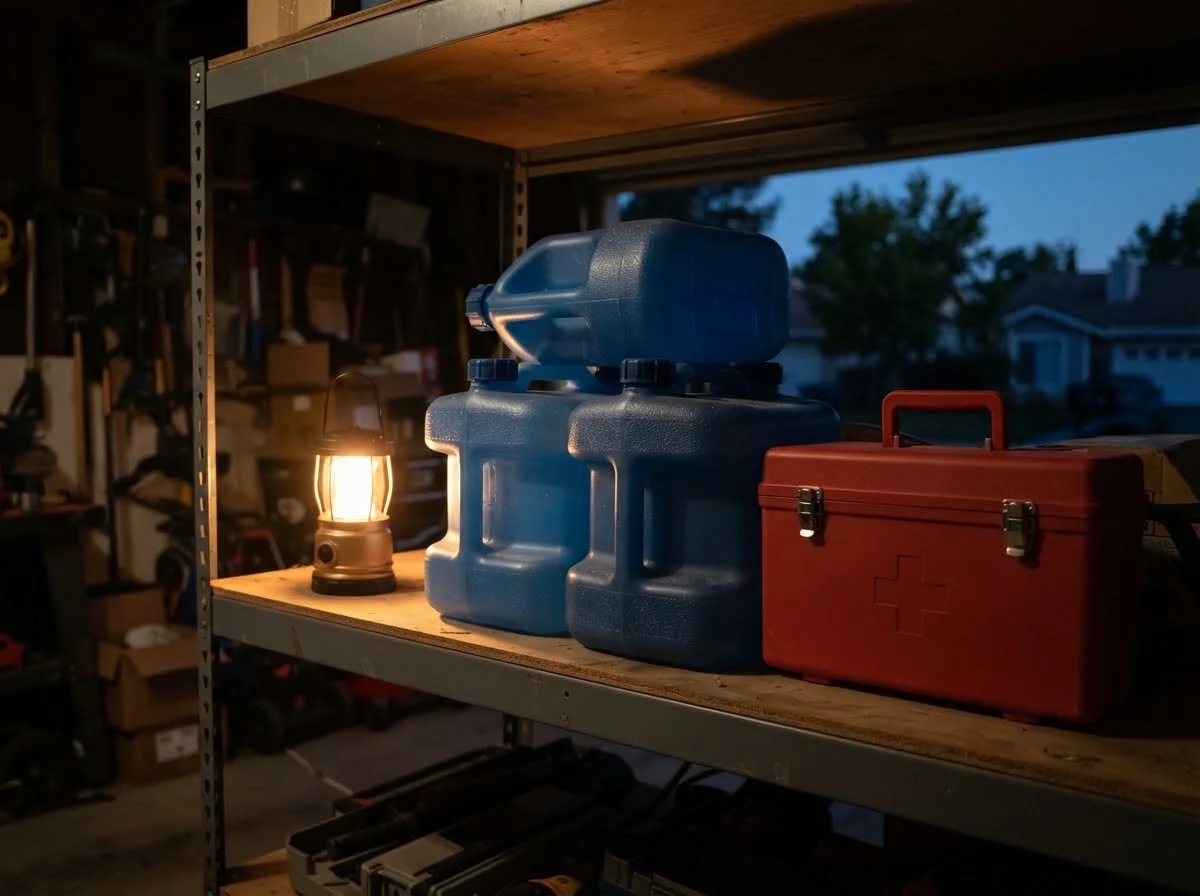
Water and first aid
Homes on wells lose water when the pump loses power. Plan for one gallon per person per day.
Reliance Aqua-Tainer 7-Gallon (4-Pack)
28 gallons total, enough for a family of four through a five-day shutoff with room to spare.
24/7 First Aid 336-Piece Kit
A well-stocked, OSHA-compliant kit in a hard case that's easy to grab and carry.
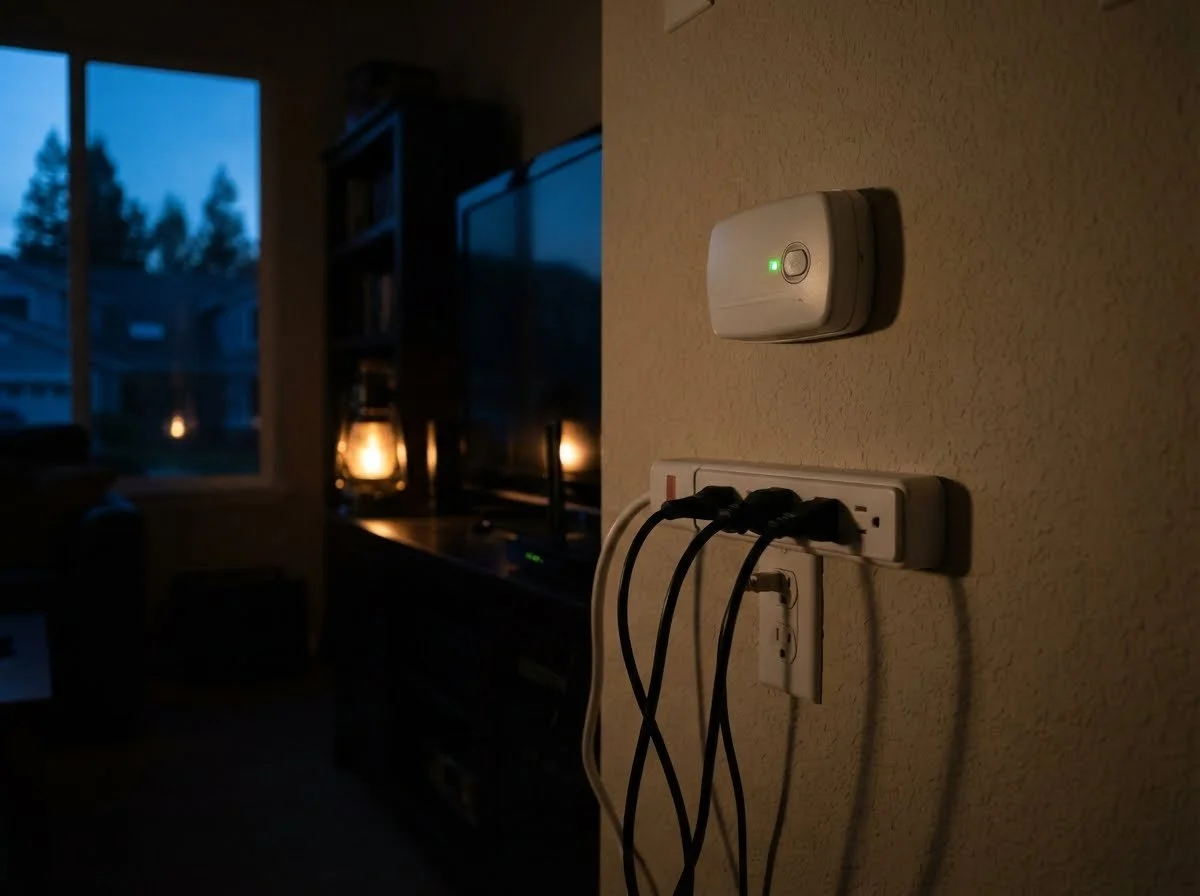
Safety
Generators bring carbon monoxide risk, and power can surge when it comes back on.
Kidde Smoke + Carbon Monoxide Detector (AA Battery)
Battery-powered, so it keeps watching for smoke and CO when the power's out.
Anker 12-Outlet Surge Protector (2,100 Joules)
Protects your TV, computer and router when power returns, with USB-C and USB-A ports for charging.
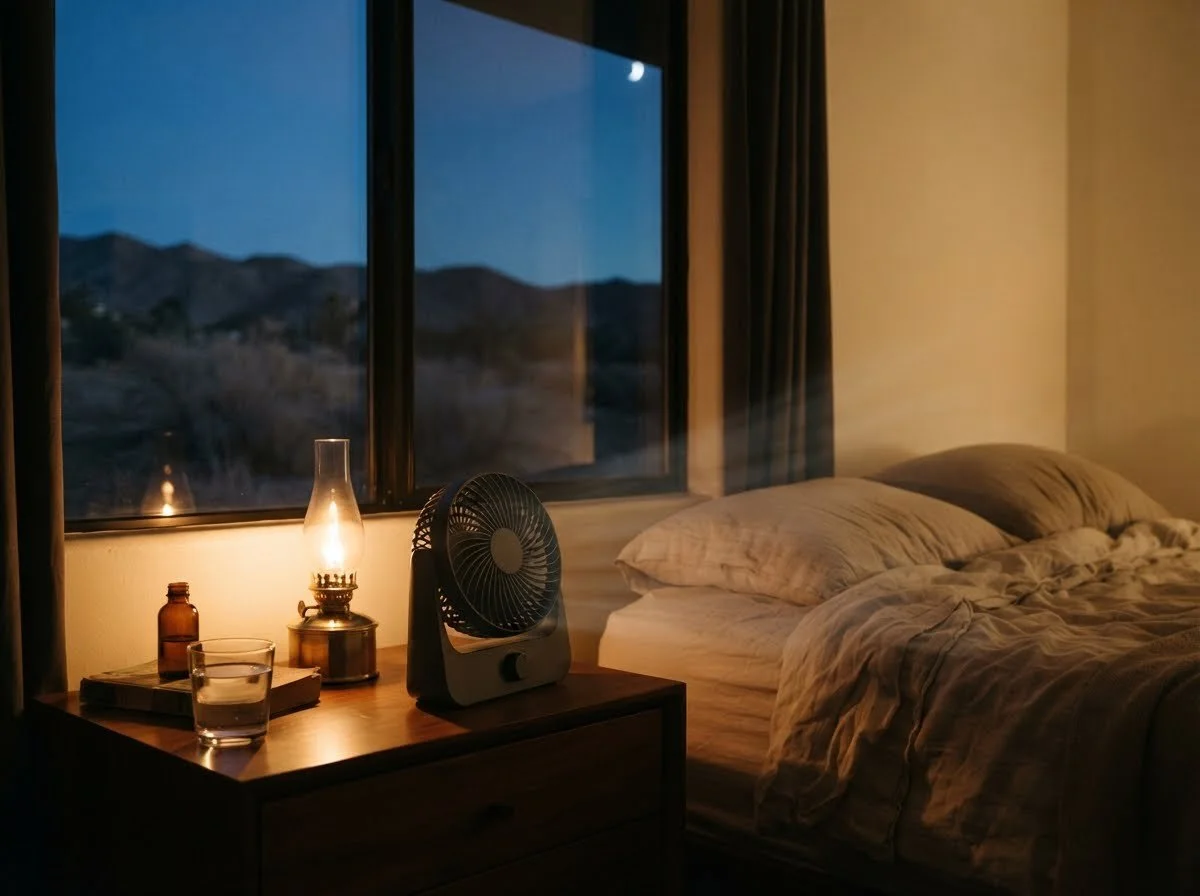
Staying cool
Fall shutoffs often arrive with hot, dry wind. With no AC, a good rechargeable fan makes nights bearable.
Socool 40,000mAh Rechargeable Fan
Oscillating fan with a built-in light and remote that can also charge a phone. The maker rates it for up to 136 hours of runtime.
Staying online matters too. Here's how we kept internet running through a PSPS shutoff.
How long will each backup option keep you going?
It depends on how big the battery is and what you plug in. A phone sips power. A refrigerator uses far more. Here's a realistic look at what each option runs during a shutoff, before it needs a recharge.
| Backup option | What it can run | About how long* | How it recharges | Noise and fuel |
|---|---|---|---|---|
| Power bank (20,000mAh) | Phones and small USB devices | About 4 phone charges | Wall outlet, power station or car | Silent, no fuel |
| Portable power station (about 1,000Wh) | Wi-Fi, lights, phones, a CPAP or a fridge for part of a day | About 14 hours on lights, Wi-Fi and phones, or about 2 days on Wi-Fi alone | Wall, car or portable solar panels | Silent, no fuel, safe indoors |
| Portable power station (about 2,000Wh) | The above, plus a full-size fridge | About 1 day running a fridge, or about 29 hours on lights, Wi-Fi and phones | Wall, car or portable solar panels | Silent, no fuel, safe indoors |
| Portable gas generator | Fridge, lights, fans and some larger appliances | As long as you have fuel | Refuel with gas | Loud, outdoors only, carbon monoxide risk, fuel to store |
| Home battery with solar (1 Tesla Powerwall 3) | Your essential circuits, switching on automatically | About 2 days on essentials alone, and solar can recharge it each sunny day | Rooftop solar or the grid | Silent, no fuel, installed permanently |
*Rough estimates, not guarantees. Portable stations assume about 85% usable output, lights + Wi-Fi + phones drawing about 60 watts, Wi-Fi alone about 15 watts, and a fridge using about 1.5 kWh per day (check the yellow EnergyGuide label on yours). Powerwall 3 assumes its 13.5 kWh of usable storage and about 300 watts of essential loads. Your actual runtime depends on your appliances and weather. † Run your own numbers in the Powerwall Calculator.
Are there rebates for outage gear in California?
Yes, if you live in a fire-risk area. PG&E, SCE and SDG&E all offer money back on portable power stations or generators for qualifying customers. Clean Power Alliance customers can also get help with a permanent home battery. Each program has its own rules, so check yours before you buy.
PG&E
Limited funds leftUp to $300 back on a portable battery or generator
- Up to $200 more for CARE or FERA customers.
- For homes in high fire-threat areas or on Enhanced Power Safety Settings circuits.
- Portable batteries must be between 290 and 1,000 watt-hours. PG&E calls this limit strict.
- Apply by December 31, 2026. PG&E reported about 125 rebates left as of October 15.
SCE
Up to $200 back on a portable power station
- For customers in SCE's high fire-risk areas.
- Larger rebates are available on generators, with more for income-qualified and Medical Baseline customers.
- Eligible products are listed on SCE Marketplace.
SDG&E
$150 back on a portable power station
- Plus $300 on a qualifying fuel generator.
- For homes in fire-threat Tier 2 or 3 areas that have had a shutoff, or for CARE and FERA customers.
- The product must be new, bought in California in 2026, and on SDG&E's qualified list.
Clean Power Alliance (SCE area)
Up to $3,500 toward a home battery
- For a permanently installed battery, not portable gear.
- $2,000 for every CPA customer, plus $1,250 in shutoff-prone areas.
- Funding is limited and first-come, first-served.
Rebate details as of October 2026. Programs change and funds run out, so confirm with your utility before buying.
When does a home battery make more sense than a kit?
When shutoffs stop being rare. A kit gets you through a night or two. A home battery like the Tesla Powerwall 3 switches on by itself the moment the grid drops, runs your essential circuits, and recharges from solar every sunny day.
"Our Powerwall kept the Starlink dish and router running through our last PSPS shutoff. We never lost internet, and nobody had to haul gas or run a cord across the floor." — Ed Watts
If you already have solar, this matters even more. Most grid-tied solar systems shut off during an outage for safety. Adding a battery is what keeps your panels working for you when the power is out.
Home batteries cost less than most people expect. A Maxwell Power prepaid plan takes a big discount off the price upfront, and some addresses qualify for an even bigger discount. Clean Power Alliance customers can stack up to $3,500 on top.
A home battery is worth a look if…
- You've been through more than one shutoff in the last couple of years.
- Outages in your area tend to last more than a day.
- You're on a well, so no power means no water.
- Someone at home relies on a CPAP, oxygen or other medical equipment.
- You work from home and can't lose internet.
- You already have solar that goes dark when the grid does.
- You're tired of storing gas and running a generator in the yard.
Power outage kit questions
How long should a power outage kit last in California?
At least five days. PG&E has told customers that PSPS shutoffs can last two to seven days, and other California utilities can shut power off for days too. Plan for light, phone power, cold food, water and news for every person in your home.
How much water do I need for a PSPS shutoff?
One gallon per person per day. For a five-day shutoff, a family of four needs about 20 gallons. Homes on a well need to plan carefully, because the pump stops when the power goes out.
How long does food stay safe in the fridge during a power outage?
About 4 hours if you keep the door closed. A full freezer holds its temperature for about 48 hours, or about 24 hours if it is half full. After that, move essentials to a cooler with ice packs and check temperatures with a thermometer.
Can I run a generator inside during a shutoff?
No. Portable generators must run outdoors, away from windows, doors and vents, because they produce carbon monoxide. Never plug a generator into a wall outlet or your electrical panel. Keep a battery-powered carbon monoxide alarm inside your home.
Do portable power stations qualify for utility rebates?
Some do, if you qualify. PG&E covers portable batteries from 290 to 1,000 watt-hours for homes in high fire-threat areas. SCE and SDG&E offer their own rebates with qualified product lists, so check your utility's list before you buy.
Is a home battery better than a generator for PSPS outages?
For repeat or multi-day shutoffs, often yes. A home battery switches on automatically, runs silently with no fuel, and recharges from solar on sunny days. Use our Powerwall Calculator to see how long one would run your home.
Build the kit now. Not when the shutoff text arrives.
By the time a shutoff is announced, store shelves empty out fast. Get your kit ready this week, and if outages keep stretching into days, find out how long a home battery would keep your lights on.
As an Amazon Associate I earn from qualifying purchases. Some links on this page are affiliate links, which means I may earn a commission at no extra cost to you. I only recommend gear I'd put in my own kit.